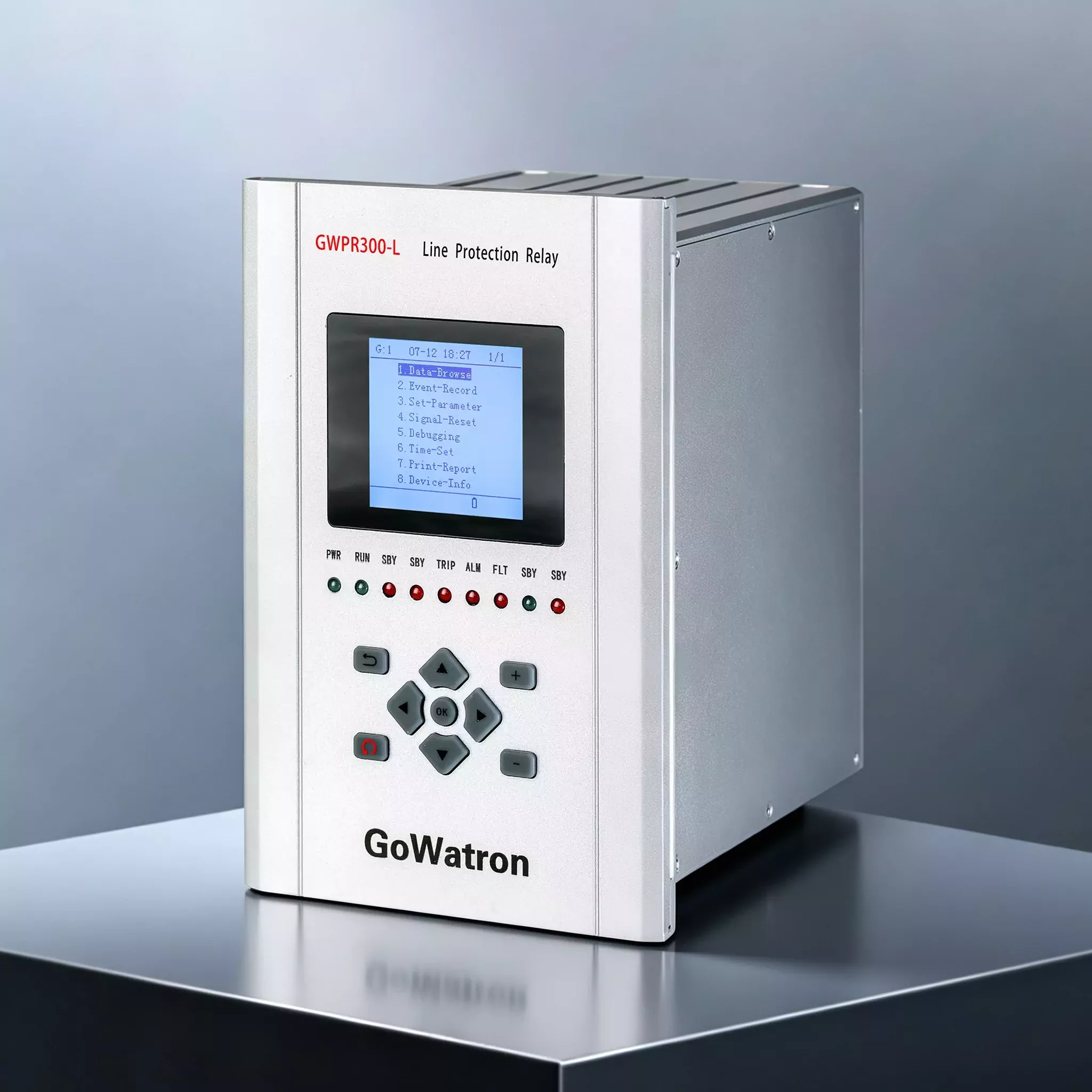
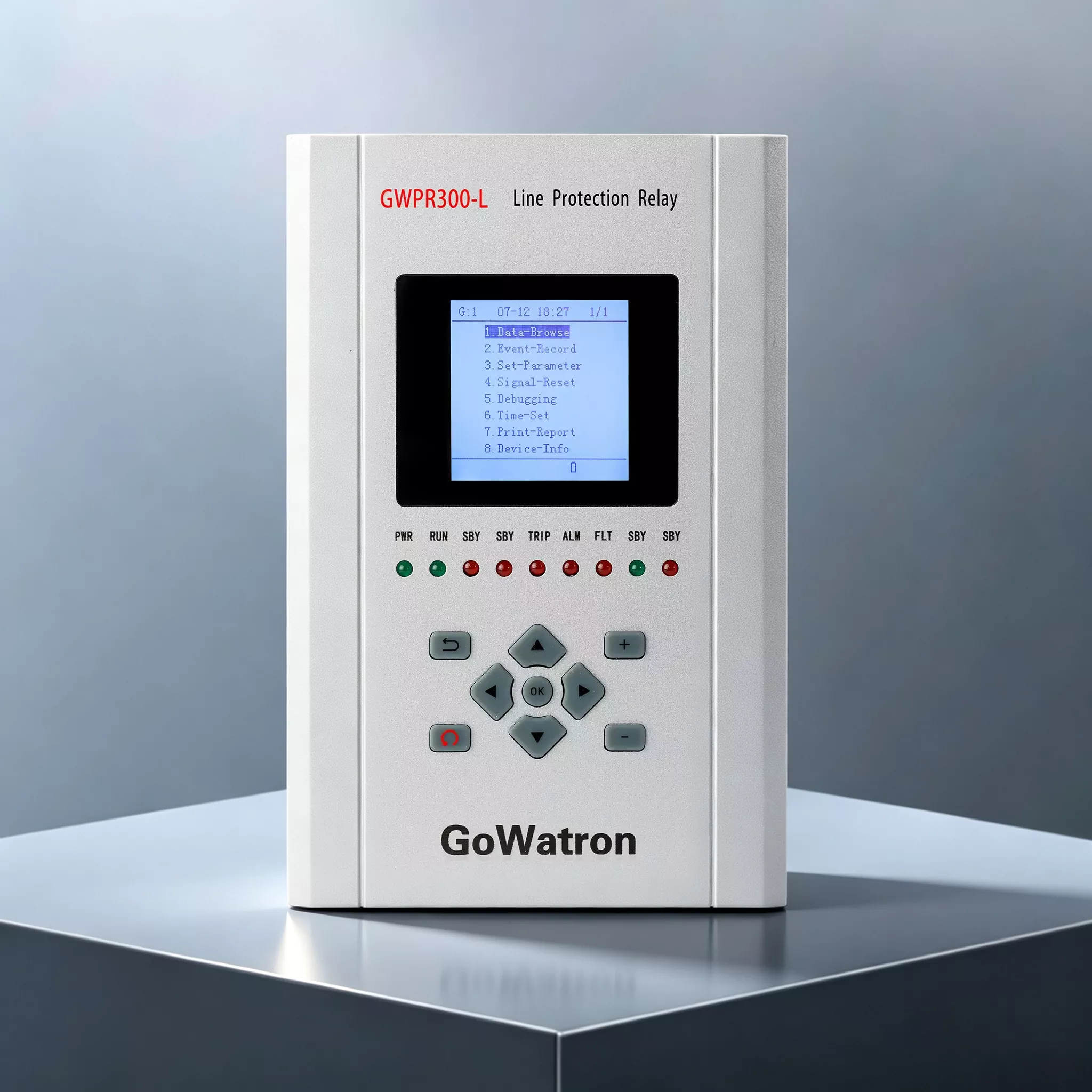
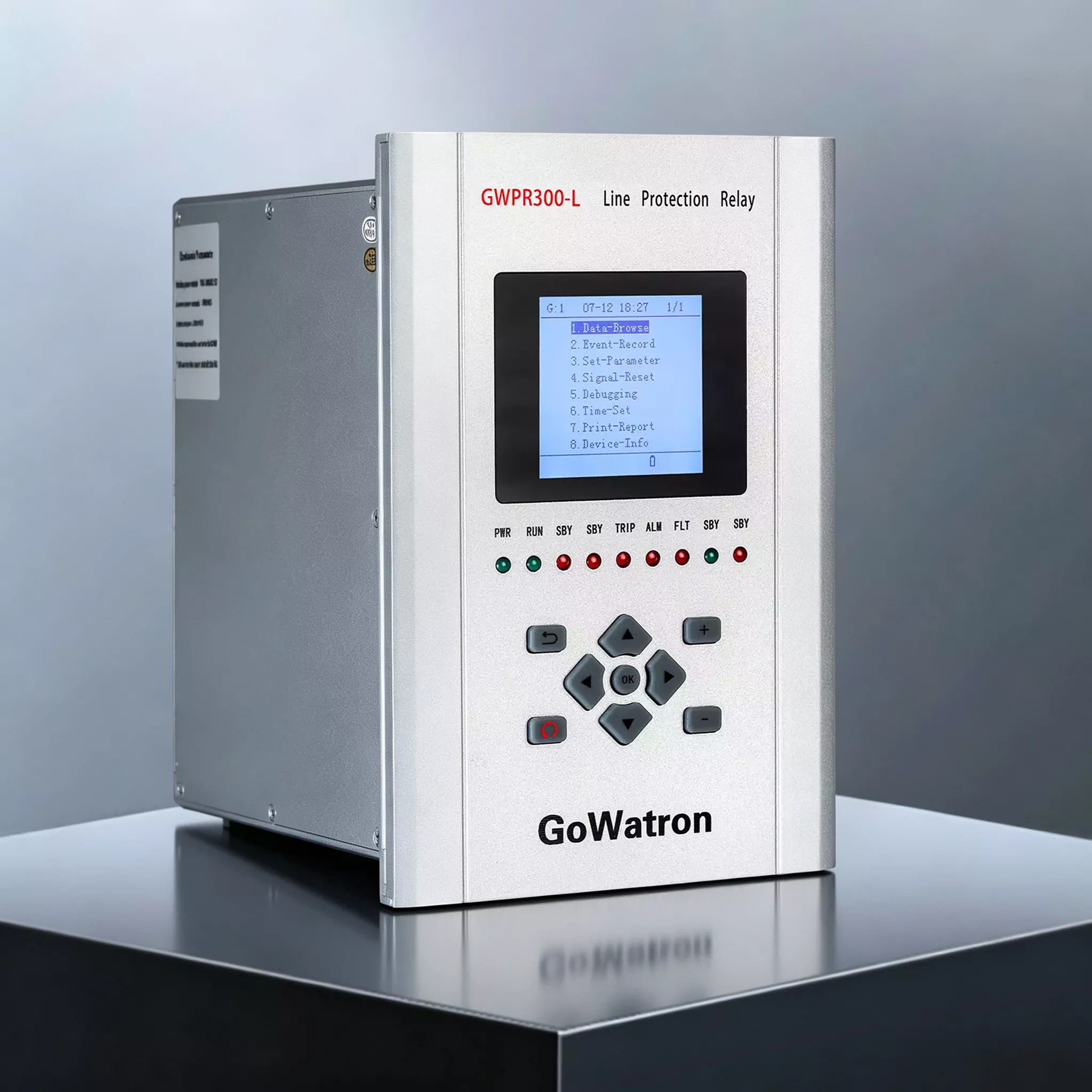
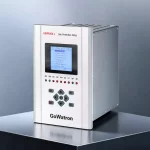
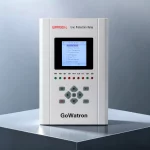

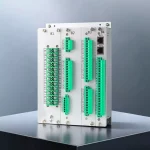
GWPR300-L Line Protection Relay
The GWPR300-L Line Protection Relay is mainly applied to the protection and control of incoming and outgoing feeder switchgear for 66kV, 33kV, 22kV and 11kV systems. This numerical relay integrates protection, remote control, telemetry, remote signalling and remote regulation functions, delivering high-performance microprocessor-based protection.
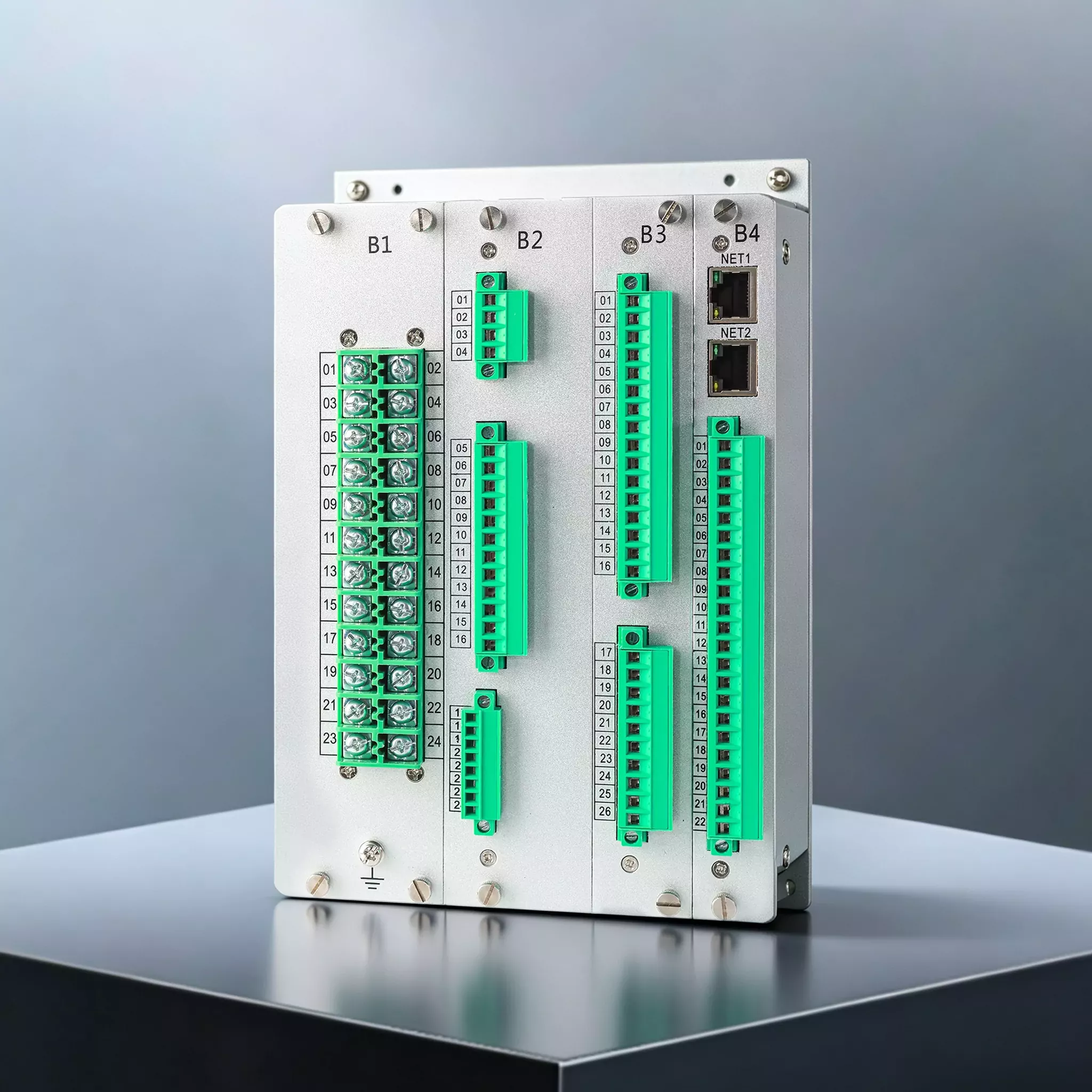
- Communication Function: Fitted as standard with 2 Ethernet ports (IEC103/IEC104) and 1 RS485 port (Modbus-RTU). An additional 2 Ethernet ports supporting IEC61850 are optional.
- Time Synchronization Function: Supports IEEE 1588 PTP (message-based synchronization), SNTP and IRIG-B.
- Fault Wave Recording Function: It can store 128 records each for protection events and alarm events, 128 remote signalling records, 128 operation logs, 16 self-check records and 32 fault wave records. Relevant time stamps, values and action information can be fully saved.
- Measurement & Control Function: Measures three-phase voltage, current, power, power factor, frequency, electric energy and other electrical parameters. It is configured with 21 active digital inputs, 13 independent relay outputs and 1 power-loss signal output.





Product Introduction
The GWPR300-L Line Protection Relay adopts a 32-bit high-performance microcontroller integrated with DSP and FPU. It efficiently executes protection calculations, output logic, event logging, fault waveform recording and background communication. This device is applicable to line protection and measurement & control for isolated neutral systems, resistance-grounded neutral systems and solidly grounded neutral systems at 66kV, 33kV and below, as well as certain 132kV systems with less stringent protection requirements. This device features strong hardware expandability and high real-time performance. Adopting modular protection design, it allows flexible function configuration. With an entirely enclosed structure and strict separation of strong and weak current circuits, it applies multiple immunity measures and fully complies with relevant electromagnetic compatibility (EMC) standards. It also provides a user-friendly human-machine interface, diverse communication ports and an IRIG-B time synchronization interface, facilitating on-site testing, maintenance and background communication.
Product Functions
- (ANSI 50/51+67+27/59) Overcurrent Stage I, II, III Protection (Trip, with directional and composite voltage blocking)
- (ANSI 51+67+27+59N) Inverse-Time Overcurrent Protection (Trip; Normal / Very / Extreme characteristics optional, with directional and composite voltage blocking)
- (ANSI 50/51+67+27/59) Overcurrent Post-Acceleration Protection (Trip, with directional and composite voltage blocking)
- (ANSI 49) Overload Protection (Alarm / Trip optional)
- (ANSI 50N/51N+67N) Zero-Sequence Overcurrent Stage I, II Protection (Trip, with zero-sequence directional and zero-sequence voltage blocking)
- (ANSI 50N/51N) Zero-Sequence Overcurrent Stage III Protection (Alarm / Trip optional)
- (ANSI 51N) Zero-Sequence Inverse-Time Overcurrent Protection (Trip; Normal / Very / Extreme characteristics optional)
- (ANSI 50N/51N) Zero-Sequence Overcurrent Post-Acceleration Protection (Trip)
- (ANSI 79) Automatic Reclosing (No check / Dead line check / Synchronism check, non-synchronism start, high current blocking)
- (ANSI 59) Overvoltage Protection (Trip)
- (ANSI 27) Undervoltage Protection (Alarm / Trip optional)
- (ANSI 59N) Zero-Sequence Overvoltage Protection (Alarm / Trip optional)
- (ANSI 81L) Underfrequency Load Shedding (Trip, with undervoltage blocking and df/dt blocking)
- (ANSI 27) System Loss of Voltage (Alarm / Trip optional)
- (ANSI 60) PT Circuit Failure (Alarm)(ANSI 86) Control Circuit Failure (Alarm)
Scope of Application
Medium Voltage Distribution Lines (6kV, 11kV, 20kV, 33kV)
- Scope of Application: Urban distribution feeders, rural overhead lines, on-site dedicated cable feeders, and grid interconnection circuits for small-scale distributed photovoltaic power stations.
- Application Scenarios: Single-source radial circuits and partially open-loop network circuits. Overhead lines mostly experience transient faults, whereas cable faults are generally permanent.
- Protection Configuration: Instantaneous overcurrent protection, definite-time delayed overcurrent protection, definite-time / inverse-time overcurrent protection, zero-sequence earth fault protection, and single-shot three-phase auto-reclosing (auto-reclosing shall be deactivated for cable circuits).
Sub-Transmission Lines (66kV, 132kV)
- Scope of Application: Interconnection circuits between regional substations, grid connection circuits for medium and small power plants, and dedicated supply trunk circuits for industrial and mining facilities.
- Application Scenarios: Double-ended supply with bidirectional power flow and significant fluctuations in system operating conditions. Distance protection schemes are not implemented.
- Protection Configuration: Three-stage directional overcurrent protection, backup zero-sequence directional overcurrent protection, and auto-reclosing with synchronism check and dead-line voltage check functions.


