MNS vs GCS Low-Voltage Withdrawable Switchgear: Similarities and Differences
Document Type: Technical Articles
Document Published: 2026-09-11
Last Updated: 2026-09-11
1. Similarities
- They belong to the same product category. Both are types of low-voltage switchgear and controlgear assemblies that incorporate withdrawable functional units, typically used in 380/400/415 V AC distribution systems.
- They provide similar primary functions. Both can incorporate incoming units, outgoing feeder units, bus-coupler units, motor-control units and reactive power compensation units. They can be configured as Power Control Centres (PCCs), Motor Control Centres (MCCs) or combined PCC/MCC assemblies.
- They offer similar maintenance advantages. Individual withdrawable functional units can be removed, maintained or replaced independently, helping minimise the impact of maintenance on other circuits that remain in service.
- They incorporate similar safety provisions. Both normally provide separate compartments for functional units, busbars and cables, together with mechanical interlocking, position indication, earthing provisions and safeguards against incorrect operation.
- They serve similar applications. Both are widely used in power plants, substations, industrial facilities, data centres, commercial buildings and infrastructure projects.
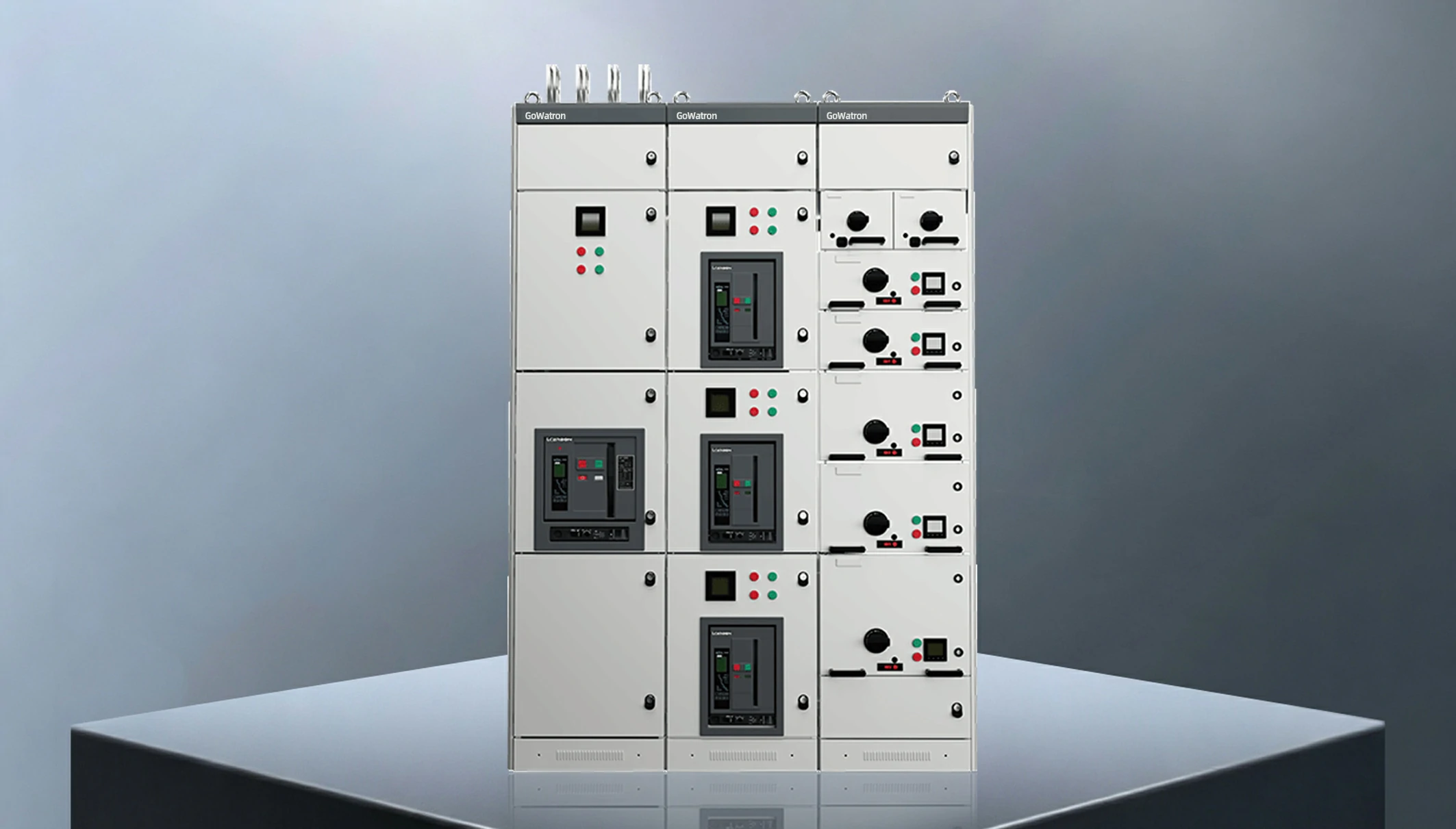
2. Differences
- Their technical origins differ. MNS is a modular low-voltage switchgear system originally developed by ABB. The wider market also includes MNS-type systems and their derivatives manufactured by other suppliers. GCS-type low-voltage withdrawable switchgear assemblies are widely manufactured and used in China, particularly for industrial and building-services applications.
- Their levels of modularity differ. The MNS system generally places greater emphasis on modular construction and flexible configuration of incoming, outgoing feeder, motor-control and compensation circuits. GCS-type assemblies normally use a more standardised structural arrangement suited to conventional low-voltage distribution projects. However, the actual modularity of either system depends on the manufacturer’s design verification.
- Their withdrawable functional-unit dimensions differ. MNS-type assemblies can generally accommodate smaller modular withdrawable functional units, making them suitable for systems with numerous low-current feeder or motor circuits. GCS-type assemblies commonly use modules of larger height and are more closely aligned with conventional project configurations.
- Their circuit densities may differ. Where enclosure dimensions, component sizes and circuit ratings are comparable, MNS-type assemblies can generally accommodate more small withdrawable functional units. This makes them particularly suitable for MCC applications with numerous circuits. The circuit density of a GCS-type assembly depends on its functional-unit dimensions, component selection and manufacturer-specific design.
- Their busbar systems and separation arrangements differ. MNS-type assemblies normally use a modular busbar system with defined separation and protection between the vertical distribution busbars and the withdrawable functional units. GCS-type assemblies also incorporate horizontal main busbars and vertical distribution busbars, but their locations, connection methods, enclosures and protective arrangements may differ.
- Their withdrawable mechanisms differ. Both systems normally provide CONNECTED, TEST and ISOLATED positions. However, their operating mechanisms, main circuit disconnecting contacts, auxiliary circuit connectors and mechanical interlocking arrangements are not identical. Components from the two systems are therefore generally not interchangeable.
- Their component-integration practices may differ. MNS-type assemblies can be configured with circuit-breakers, contactors and protection devices from various international or Chinese manufacturers, subject to design verification by the assembly manufacturer. GCS-type assemblies generally provide flexible integration of Chinese-manufactured low-voltage components, which may help reduce procurement costs and shorten delivery times.
- Their typical project positioning differs. MNS-type assemblies are generally preferred for projects that prioritise modularity, high circuit density, ease of maintenance and future expansion. GCS-type assemblies are commonly selected for conventional industrial, building-services and infrastructure power-distribution projects.
- Their cost profiles may differ. Where electrical ratings, component brands, materials and manufacturing quality are comparable, assemblies based on the original MNS technical system or a higher-specification configuration will generally be more expensive. GCS-type assemblies are normally more cost-effective, although the final price depends on busbar ratings, enclosure materials, component brands, degree of protection, form of internal separation and intelligent monitoring functions.
3. Selection Guidelines
- MNS-type low-voltage withdrawable switchgear assemblies are generally preferable when a project requires numerous circuits, high circuit density, modular construction, ease of maintenance and future expansion.
- GCS-type low-voltage withdrawable switchgear assemblies are generally preferable for conventional low-voltage power-distribution and motor-control applications where flexible integration of Chinese-manufactured components, delivery time and overall project cost are important considerations.
- The designation “MNS” or “GCS” alone does not determine the electrical performance, safety or reliability of a switchgear assembly. Selection should be based on rated operational voltage, rated current, rated peak withstand current, rated short-time withstand current, form of internal separation, degree of protection, functional-unit arrangement, internal arc fault containment requirements and principal component brands.
- MNS-type and GCS-type low-voltage switchgear and controlgear assemblies are generally designed and verified in accordance with IEC 61439-1 and IEC 61439-2, or the corresponding national standards. Final ratings, construction details and performance requirements should be verified against the manufacturer’s technical documentation, design verification records and project technical specifications.


