Technical Principles
Electrical Encyclopedia
Industry Solutions
Technical Knowledge Sharing
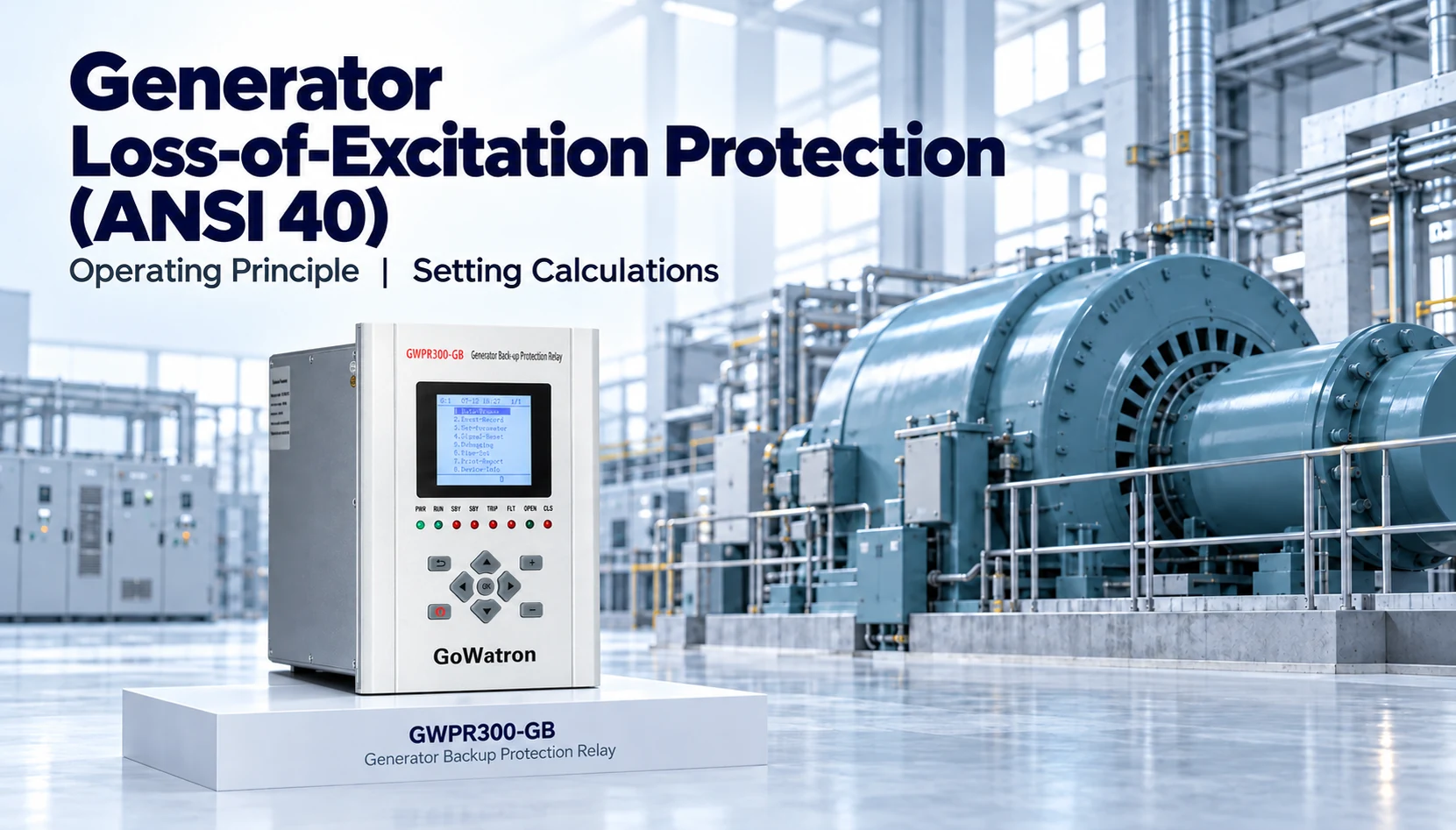
Generator Loss-of-Excitation Protection (ANSI 40): Operating Principle, Functions and Setting Calculations
1. Overview Generator loss-of-excitation protection, also known as loss-of-field protection (ANSI 40), detects abnormal operating conditions caused by the loss or severe reduction of excitation in a synchronous generator. Following a loss of excitation, the generator may absorb reactive power from the power system and lose synchronism. Depending on the generator characteristics and system conditions, […]
2026-10-08
Read more →
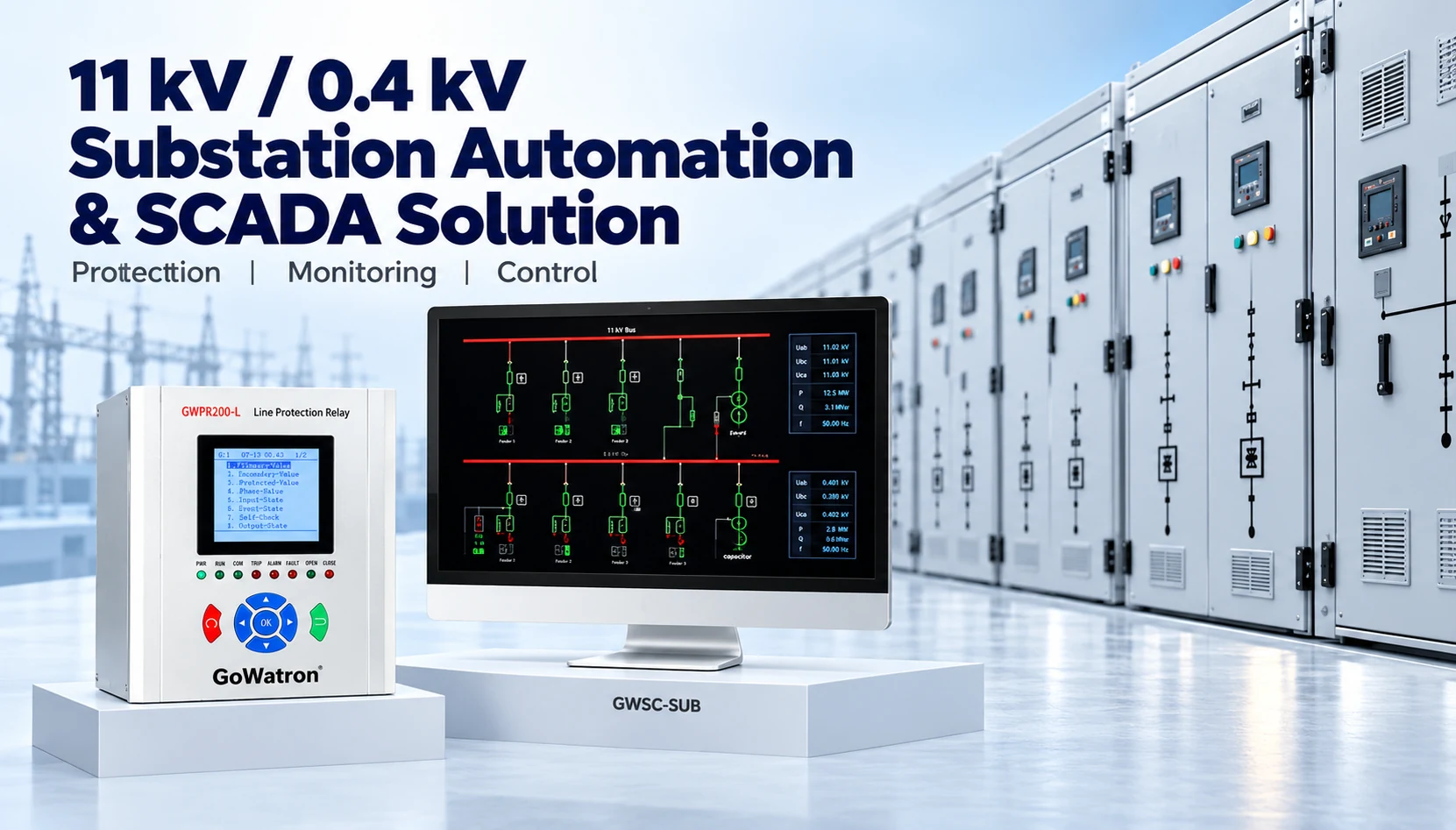
11 kV / 0.4 kV Substation Automation & SCADA System Solution
1. Overview and Objectives An 11 kV / 0.4 kV substation is an important part of the power distribution infrastructure serving industrial facilities, commercial buildings, and public facilities. Its primary functions are to receive power, step down the voltage, and distribute electricity. Power is supplied from the upstream 11 kV network and transformed to 0.4 […]
2026-10-02
Read more →
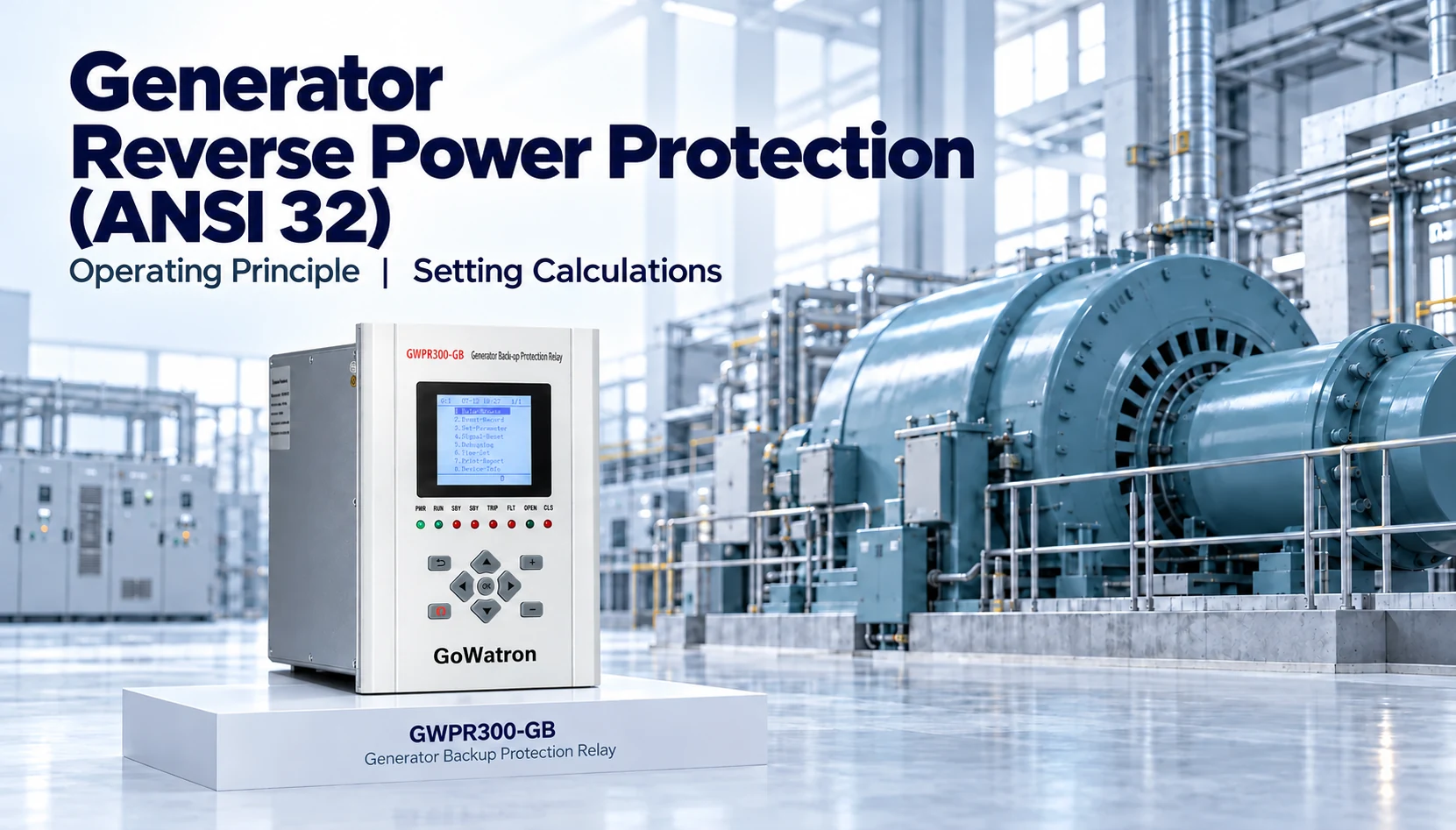
Generator Reverse Power Protection (ANSI 32): Working Principle, Purpose and Setting Calculations
I. Overview Generator reverse power protection (ANSI 32R) detects active power flowing from the grid into the generator. This condition can occur when the prime mover loses sufficient mechanical input while the generator remains connected to the grid. The generator then operates as a synchronous motor, drawing active power from the grid and mechanically driving […]
2026-10-02
Read more →
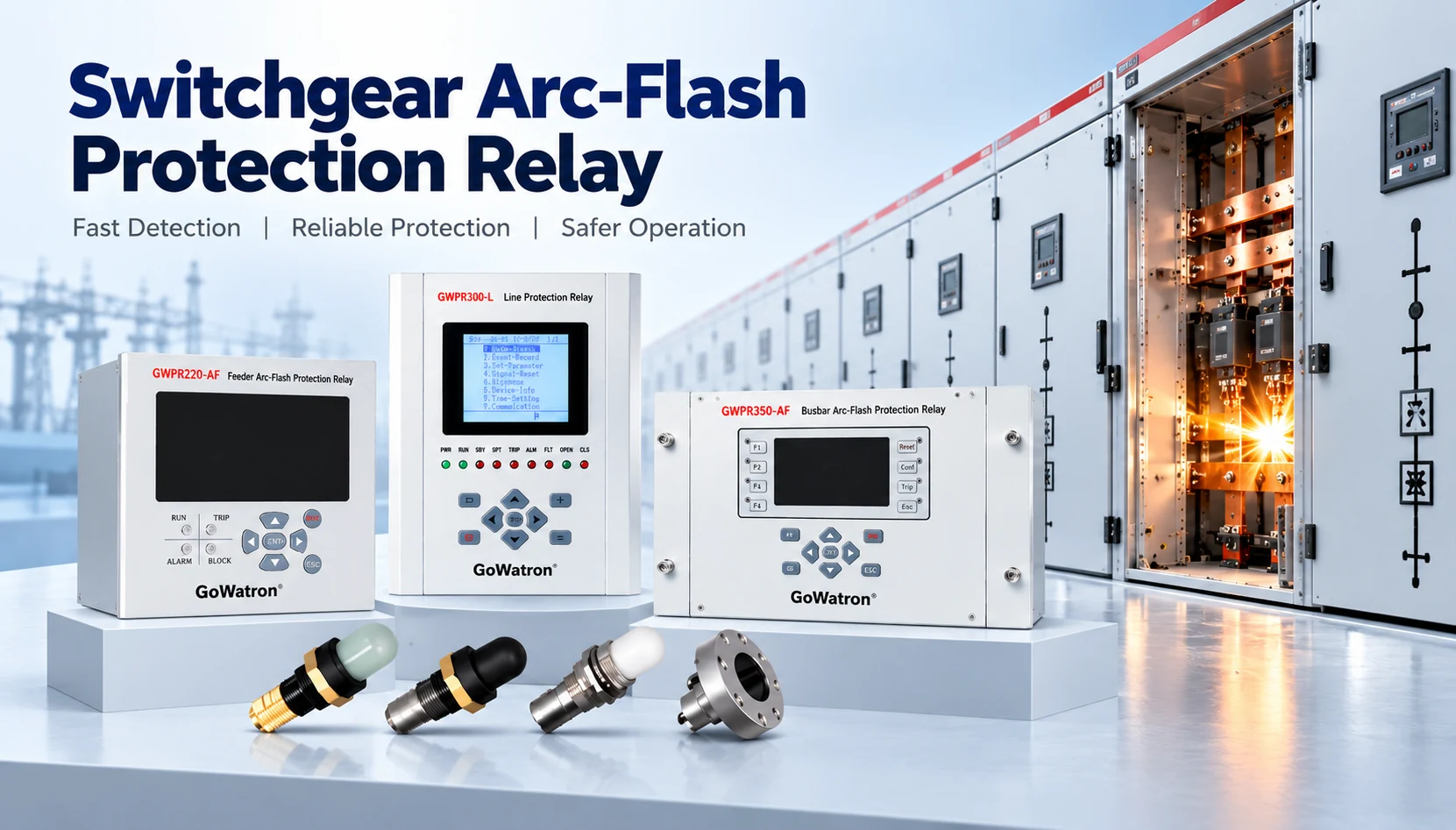
Arc-Flash Protection Relay Solution for Switchgear
1. Internal Arc Fault: A Rapidly Developing and Destructive Fault Internal arc faults in MV/LV switchgear are among the most destructive fault types in power distribution systems. When insulation breaks down or a sustained arc forms between conductors, intense light radiation, high temperature and pressure effects are produced within an extremely short time. As the […]
2026-09-30
Read more →
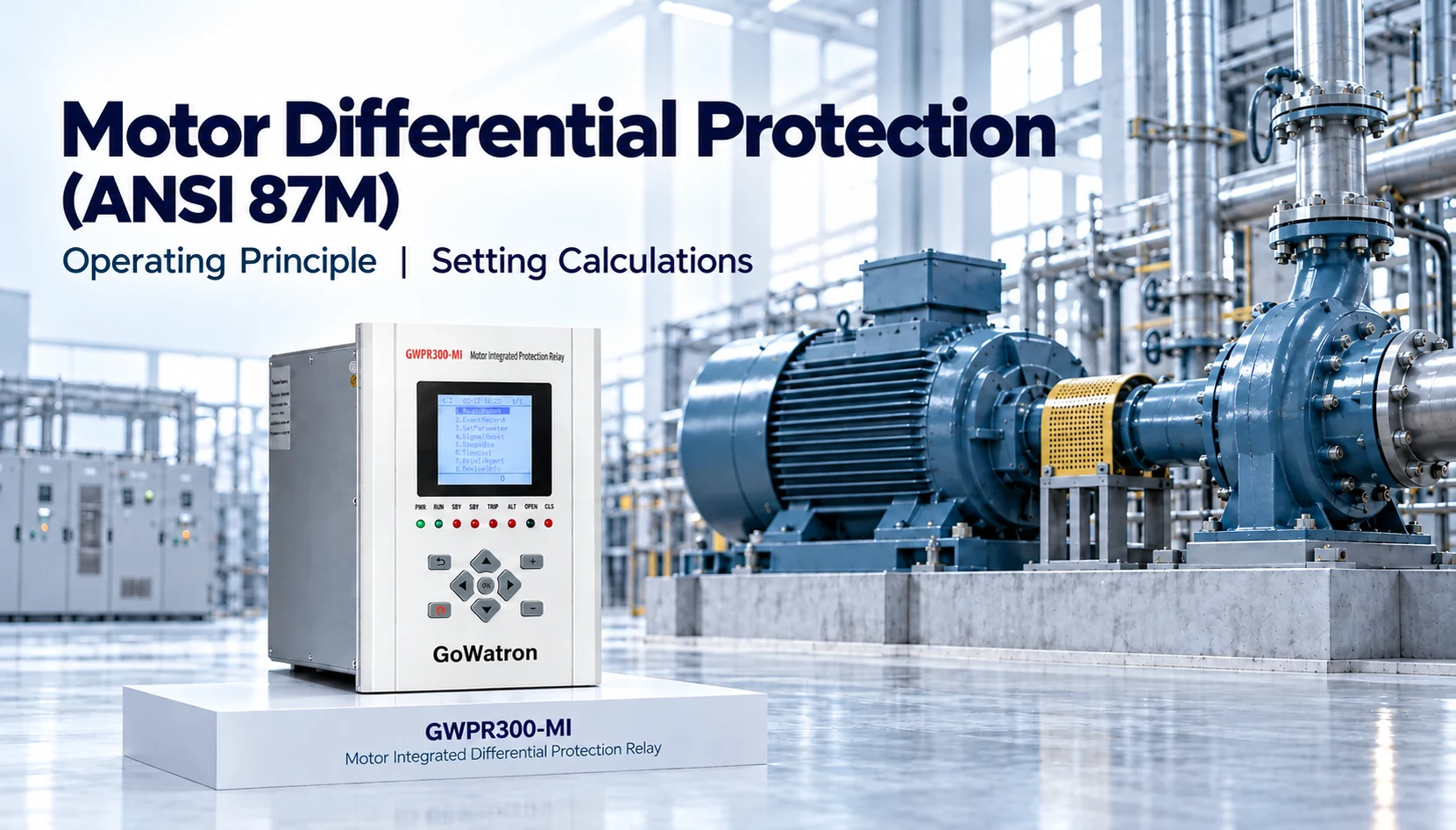
Motor Differential Protection (ANSI 87M): Working Principle, Purpose and Setting Calculation
Motor differential protection (ANSI 87M) is the main protection for large high-voltage motors, used to rapidly clear internal phase-to-phase short circuits. This article explains in detail the working principle, protection functions, setting calculation methods and typical settings of 87M, helping electrical engineers quickly master the key setting points. Applicability Note: According to GB/T 50062-2008 Code […]
2026-09-30
Read more →
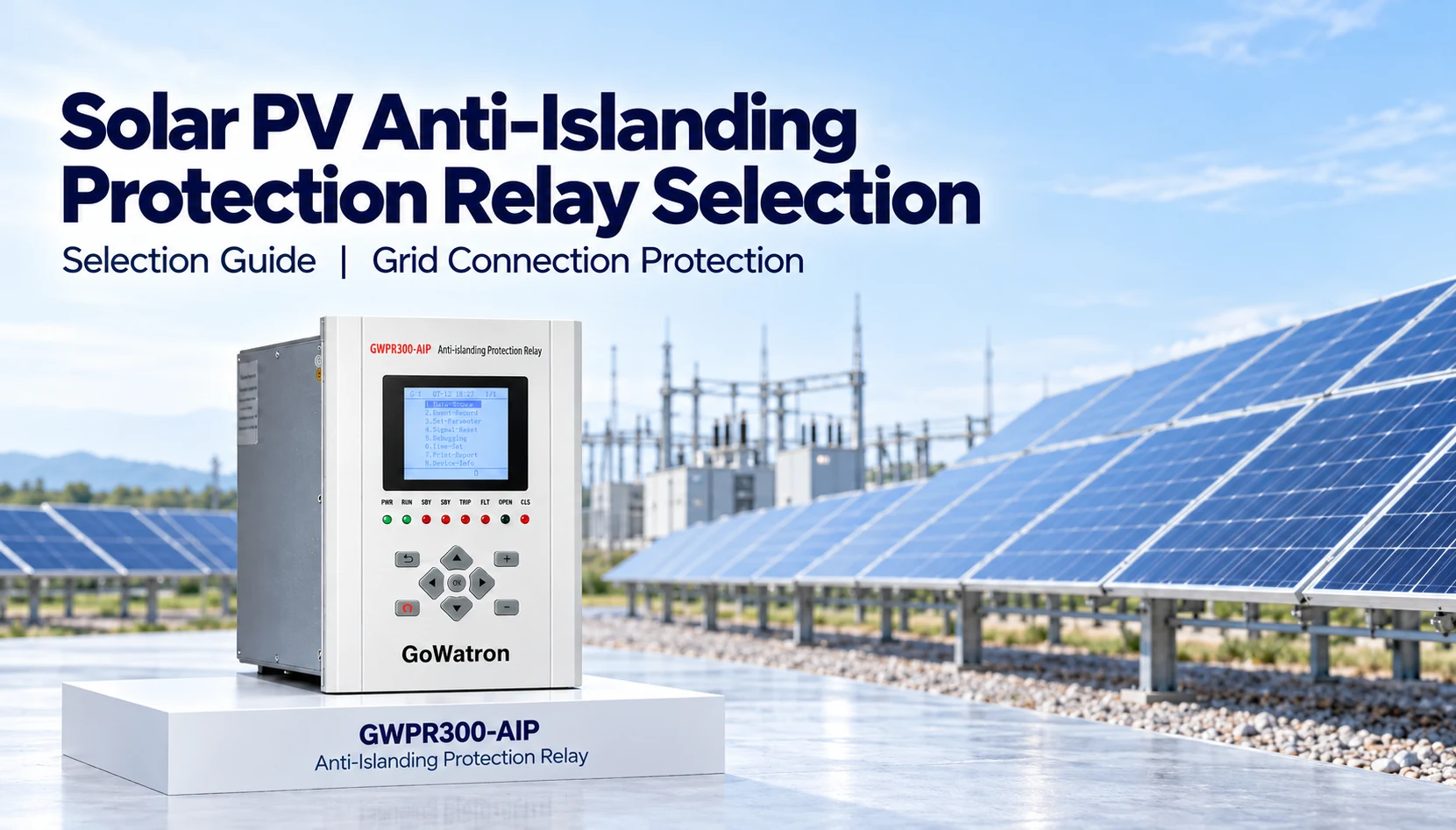
How to Select an Anti-Islanding Protection Relay for Solar PV Systems
As solar photovoltaic (PV) installations continue to expand worldwide, reliable grid interconnection protection has become increasingly important. Anti-islanding protection is one of the key protection requirements for grid-connected PV systems. Selecting the right anti-islanding protection relay requires more than matching a relay to the PV system voltage. Engineers should also consider the required protection functions, […]
2026-09-29
Read more →
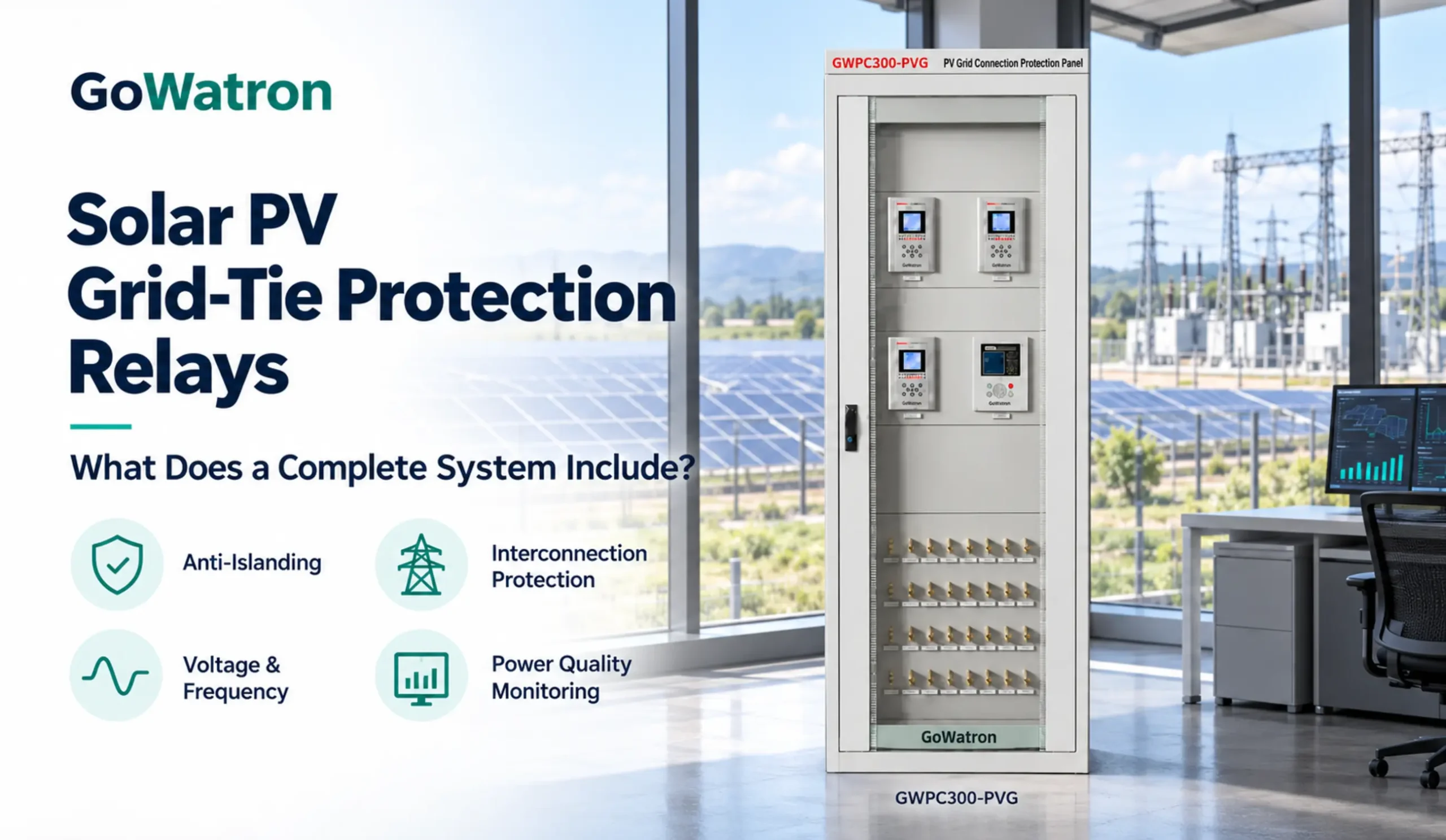
What Does a Solar PV Grid-Tie Protection Relay Include?
A solar PV grid-tie protection relay, also referred to as a PV grid interconnection protection relay, is used to monitor operating conditions at the point of common coupling (PCC) between a photovoltaic (PV) system and the utility grid. It provides protection, control and disconnection functions in response to unintentional islanding, abnormal voltage or frequency and […]
2026-09-28
Read more →
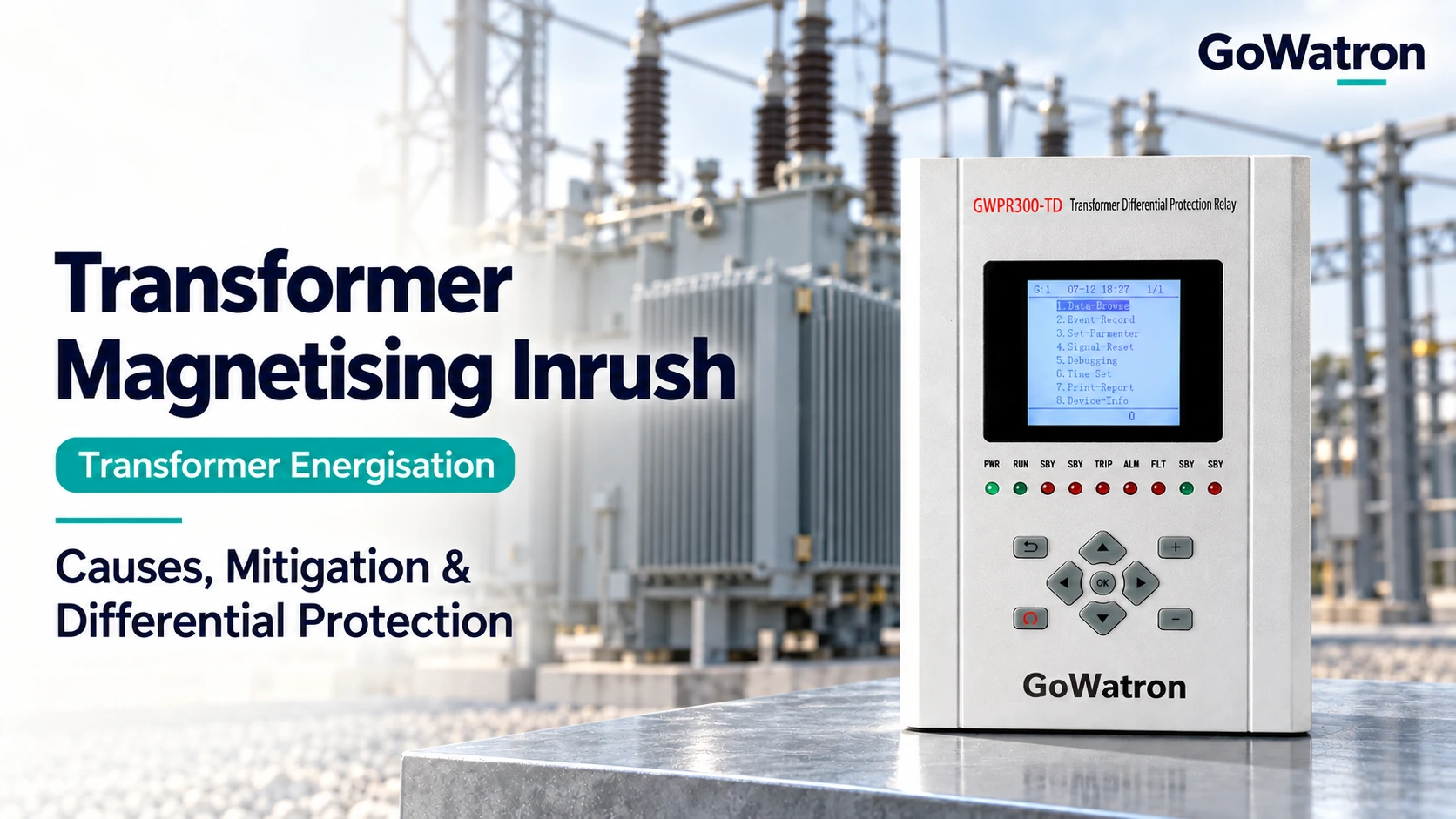
Transformer Magnetising Inrush: Causes, Mitigation, and Differential Protection
When a transformer is energised at no load, the current drawn may temporarily rise well above its normal magnetising current. This transient current is known as magnetising inrush. It is usually a consequence of energisation and does not, by itself, indicate an internal transformer fault. Magnetising inrush can produce a substantial differential current. If the […]
2026-09-24
Read more →


