Global IEC Standard 0.4kV Low-Voltage Switchgear and Controlgear Assemblies – Comparative Selection Guide
Document Type: Technical Articles
Document Published: 2026-08-15
Last Updated: 2026-08-15
- Reference Standards: IEC 61439-1:2019 / IEC 61439-2:2020 (superseding IEC 60439), AC 400V, 50/60 Hz.
- Core Compliance Criteria: DVA (Design Verification of the Assembly; commonly referred to as TTA – Type-Tested Assembly, legacy terminology from IEC 60439) + Form of Internal Separation 1~4b + Internal Arc Containment per IEC 61439-2 (tested in accordance with IEC/TR 61641, Arcing Class A/B)
- Important Note: Form of internal separation does not equate to internal arc containment capability. These two requirements are independent and non-interchangeable
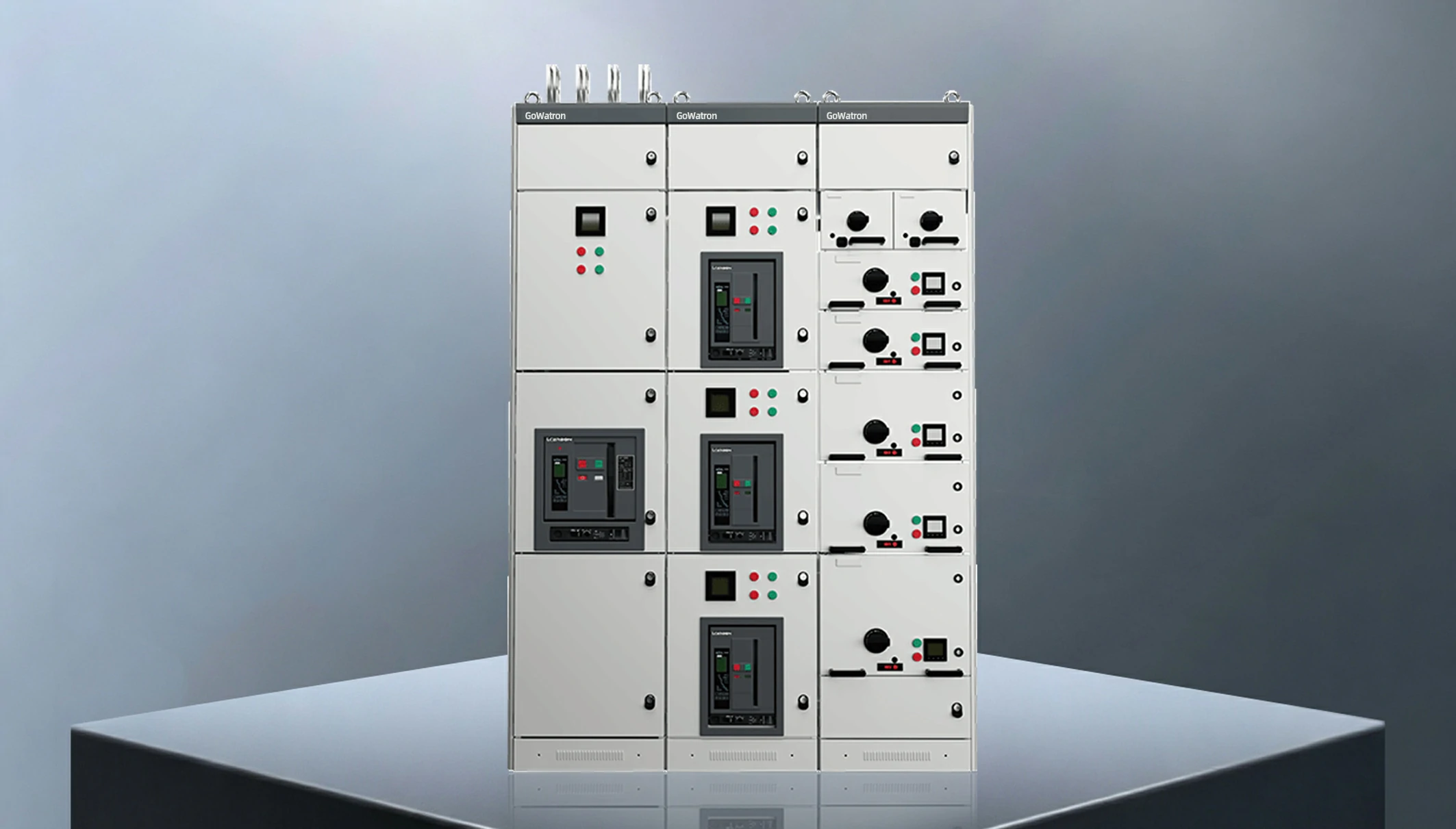
I. International Branded Assemblies (Globally Accepted)
ABB MNS 3.0
- Main busbar rating: 6300A standard, up to 7300A for Rear (back-to-back) version; Rated short-time withstand current (Icw): 100 kA/1s; 25 mm modular spacing; Maximum Form 4b separation; Verified for internal arc containment per IEC 61439-2.
- Advantages: Mature modular architecture supporting 1/4-unit high-density layout, leading space utilization in the industry. Supports single-front, double-front and back-to-back configurations; standard version enables full front access for maintenance, while the Rear series allows both front and rear access. Full range of cable entry & exit arrangements. Natively compatible with intelligent monitoring systems. Extensive global installed base across heavy industry, data centres and oil & gas projects.
- Limitations: High overall procurement cost. Proprietary framing restricts extensive non-standard modifications. Double-front variants occupy larger footprint, limiting deployment in compact electrical rooms. Widespread imitation assemblies exist in the market; most lack complete DVA test reports, so rigorous verification is mandatory during selection.
- Applications: Critical industrial facilities, continuous-power loads, high-density MCC (Motor Control Centre) installations, and high-end overseas EPC projects worldwide
Siemens SIVACON S8
- Main busbar rating: 6300A standard, up to 7010A per official catalogue; Rated short-time withstand current (Icw): up to 150 kA/1s; Basic module height: 200 mm, supports 1/2-unit spacing; Maximum Form 4b separation; Verified for internal arc containment per IEC 61439-2.
- Advantages: Industry-leading short-circuit withstand capability, suitable for networks with extremely high prospective fault currents. Fully metallic compartmentalised design delivers superior arc confinement and fault isolation. Standardised engineering tools with BIM export support ensure robust project implementation. Excellent interoperability with Siemens industrial automation systems.
- Limitations: Larger module size leads to lower circuit density in low-current distribution applications when compared with MNS 3.0 low-voltage switchgear. Concentrated supply chains cause longer delivery lead times and higher spare parts costs within less developed regions. Fixed frame dimensions limit extensive customisation.
- Applications: European domestic projects, metallurgical mines, heavy machinery manufacturing, and industrial sites with elevated short-circuit risk.
Schneider BlokSeT
- Main busbar rating: 6300A; Rated short-time withstand current (Icw): 85 kA/1s; 50 mm modular spacing; Maximum Form 4b separation; Internal arc containment per IEC 61439-2 available as an option.
- Advantages: Globally established licensed assembly network with balanced market acceptance across the Middle East, Southeast Asia and Africa. Integrated configuration for incoming feeders, motor control and reactive power compensation improves on-site assembly efficiency. Optimised protection coordination with Schneider air circuit breakers and moulded-case circuit breakers simplifies operation and maintenance.
- Limitations: 50 mm modular spacing reduces space efficiency for small-current circuits. Licensed production carries high entry barriers; non-licensed assemblies will fail technical reviews. Overall cost offers no significant price advantage.
- Applications: Overseas commercial building projects, water & wastewater treatment plants, small-to-medium factories, and general commercial & industrial distribution.
Schneider Prisma iPM
- Compact fixed-type distribution assembly for end-user applications. Main busbar rating: 2500A standard, extendable to 4000A; Rated short-time withstand current (Icw): 50 kA/1s; Maximum Form 3b separation; No standard internal arc containment solution offered by the manufacturer.
- Advantages: Lightweight construction, supports floor-standing or wall-mounted installation. Cost-effective for decentralised small-load distribution. Multiple IP protection ratings available for commercial and light-industrial environments.
- Limitations: No withdrawable unit solution available, unsuitable for motor control circuits requiring frequent maintenance access. Limited busbar current-carrying capacity and short-circuit withstand capability, and therefore not applicable as main incoming switchgear.
- Applications: Building floor distribution, IT room sub-distribution, and final distribution for commercial complexes.
II. Chinese-Designed Assemblies
- These assembly types were originally developed against Chinese GB standards, with structural design referencing IEC 61439 frameworks. The current GB/T 7251.2-2023 is technically equivalent to IEC 61439-2; however, most manufacturers have not completed full DVA certification for their respective designs. Only a small number of qualified suppliers can provide third-party IEC type-test reports. These products deliver prominent cost advantages and are widely adopted in mid-tier overseas projects across Southeast Asia and Africa, yet recognition remains limited within the EU, Australia, and high-end oil & gas / power sector projects.
GGD Fixed-Type Assembly
- Main busbar rating: 3150A; Rated short-time withstand current (Icw): typically ≤ 50 kA; Fully fixed construction; The vast majority of manufacturers hold no test reports for internal arc containment per IEC 61439-2.
- Advantages: Extremely simple construction with low failure rates and minimal maintenance skill requirements. Excellent heat dissipation and low manufacturing cost. Large domestic installed base with widely available spare parts.
- Limitations: No withdrawable units; circuit maintenance generally requires upstream shutdown. Low space utilisation and no provision for live-maintenance capability. Despite the national standard’s technical equivalence to IEC 61439, most suppliers lack complete IEC DVA test documentation.
- Applications: Incoming feeders, bus-tie cabinets, reactive power compensation installations, and steady-state LV distribution (only applicable for projects without mandatory IEC type-testing requirements).
GCK Withdrawable-Type Assembly
- Economical withdrawable construction for low-to-medium current ratings; The vast majority of manufacturers hold no test reports for internal arc containment per IEC 61439-2.
- Advantages: Drawer units can be exchanged as a whole, delivering greater maintenance flexibility than fixed-type assemblies. High cost-effectiveness for budget-constrained projects. Mature product design with a large domestic installed base.
- Limitations: Top-mounted busbar layout results in relatively weak short-circuit dynamic and thermal stability. Limited protection for vertical busbars. Variations in mechanical interlocking precision; overall technical architecture is dated. Low coverage of complete IEC DVA certification.
- Applications: Stable-load environments without high availability requirements; small-to-medium factories and mid-tier overseas industrial projects with simple specifications.
GCS Withdrawable-Type Assembly
- Main busbar rating: 4000A; Rated short-time withstand current (Icw): 65 kA/1s standard, with custom engineering up to 80 kA/1s (non-standard ratings are only valid when supported by the manufacturer’s corresponding DVA test reports and cannot be assumed by default); Rear-mounted busbar configuration; The vast majority of manufacturers hold no test reports for internal arc containment per IEC 61439-2.
- Advantages: Rear-mounted busbar design enhances dynamic and thermal stability; ample internal wiring space enables orderly cable routing. Reliable drawer interlocking mechanisms and good unit interchangeability. Superior overall cost-performance versus international brands. A small number of top-tier domestic suppliers can provide compliant third-party IEC test reports for mid-tier export projects.
- Limitations: Single-front access only, restricting layout flexibility. Large modular spacing leads to insufficient circuit density for small-current applications. No mature double-front maintenance solution, making it unsuitable for complex large-scale industrial facilities.
- Applications: General industrial plants, commercial distribution, and mid-tier overseas projects in Southeast Asia and Africa (IEC full test documentation must be verified separately for each manufacturer).
MNS-Lookalike Assemblies (Significant Risk Warning)
- Numerous enclosures on the market replicate only the external appearance of MNS 3.0. Most lack valid IEC 61439 DVA design verification and internal arc containment certification per IEC 61439-2.
- Risk Note: Critical performance parameters including temperature rise, short-circuit withstand and internal arc containment cannot be guaranteed. Such products are only acceptable for internal non-certified simple distribution applications. They are categorically rejected in international tenders, oil & gas and overseas power projects; selection must be strictly avoided.
III. Core Selection Criteria
Certification Priority (Mandatory Gate Criterion)
- Branded original assemblies with complete DVA (commonly referred to as TTA) design verification > Compliant Chinese-manufactured assemblies with third-party IEC test reports. Non-verified imitation assemblies are strictly prohibited for any IEC-compliant project. For European, American and high-end industrial projects, complete IEC 61439 test reports covering temperature rise, rated short-time withstand current and internal arc containment are mandatory.
- A mere declaration that “GB standards are technically equivalent to IEC” is not recognised as valid without supporting test documentation.
Internal Separation Form Selection
- Form 2b or Form 3b is acceptable for general commercial and civil projects. For industrial loads, critical uninterruptible power installations and overseas projects, Form 4b (full independent compartmentalisation) is recommended to prevent fault propagation across circuits.
Internal Arc Containment (IEC 61439-2, tested per IEC/TR 61641) - High-risk industrial applications shall explicitly specify internal arc containment: Arcing Class A (rear-side protection only) or Arcing Class B (front and rear protection), together with agreed arc duration parameters. Leading international branded assemblies generally have corresponding test data available. The vast majority of Chinese-designed assemblies lack this verification; dedicated documentation check is required during selection, and such capability cannot be presumed.
Derating Conditions
- Reference ambient temperature: 35°C; reference altitude: ≤1000 m above sea level. Derating is mandatory when ambient temperature exceeds 35°C or altitude exceeds 1000 m. Derating coefficients shall be based on actual temperature-rise data from the specific DVA test report; generic empirical estimation factors are not permitted.
IV. Application-Based Selection Matrix
- High-density MCC motor control requiring live-maintainable withdrawable units: Primary choice: ABB MNS 3.0; Secondary choice: BlokSeT.
- Heavy-industry applications with system short-circuit current >100 kA: Preferred choice: Siemens SIVACON S8.
- Incoming feeders, bus-tie and fixed reactive compensation circuits: GGD may be adopted for projects without mandatory IEC requirements; international-brand incoming assemblies shall be selected for IEC-compliant projects.
- General industrial distribution with controlled budget: Primary choice: GCS (verify manufacturer’s IEC test reports in advance); GCK may be considered for low-end simple applications.
- Decentralised small-load final distribution: Select Prisma iPM.
- High-end overseas EPC, oil & gas and data centre projects: Restricted to MNS 3.0, SIVACON S8 and BlokSeT; original brand licensed assemblies are compulsory.
V. Identification of Licensed Assemblies vs Imitations
Documentation Review
- Request complete original IEC 61439 DVA test reports, clearly stating assembly type, rated current, short-time withstand current values and internal arc containment class. Design calculation reports or descriptive technical notes cannot substitute complete type-test verification documentation.
License Verification
- For international-brand assemblies, request the original factory licensed assembly certificate, and verify that the licensed manufacturing scope and geographic coverage include the selected assembly type for the target project location.
Physical Inspection
- MNS 3.0 withdrawable units are factory fitted with screw-type racking mechanisms and clear position indication (fixed units excluded). Imitation products typically adopt simple lever-operated mechanisms. Copper busbar cross-sections and insulator support spacing inside the assembly shall match the sample documented in the test report; any structural deviation renders the design verification invalid.
Summary
- International-brand factory-built assemblies, backed by complete IEC design verification, generally available internal arc containment and globally interoperable technical frameworks, dominate European & US standard projects and high-end overseas EPC markets. Chinese-designed GGD/GCK/GCS assemblies deliver excellent cost-performance ratios and strong competitiveness in emerging markets, yet their common limitations include insufficient full IEC certification coverage, limited performance under extreme operating conditions and absence of internal arc containment verification.
- Selection decisions shall follow the priority hierarchy: Certification compliance → Short-circuit withstand capability → Separation form & arc containment → Application scenario → Project budget. Price shall never be used as the sole selection criterion.


