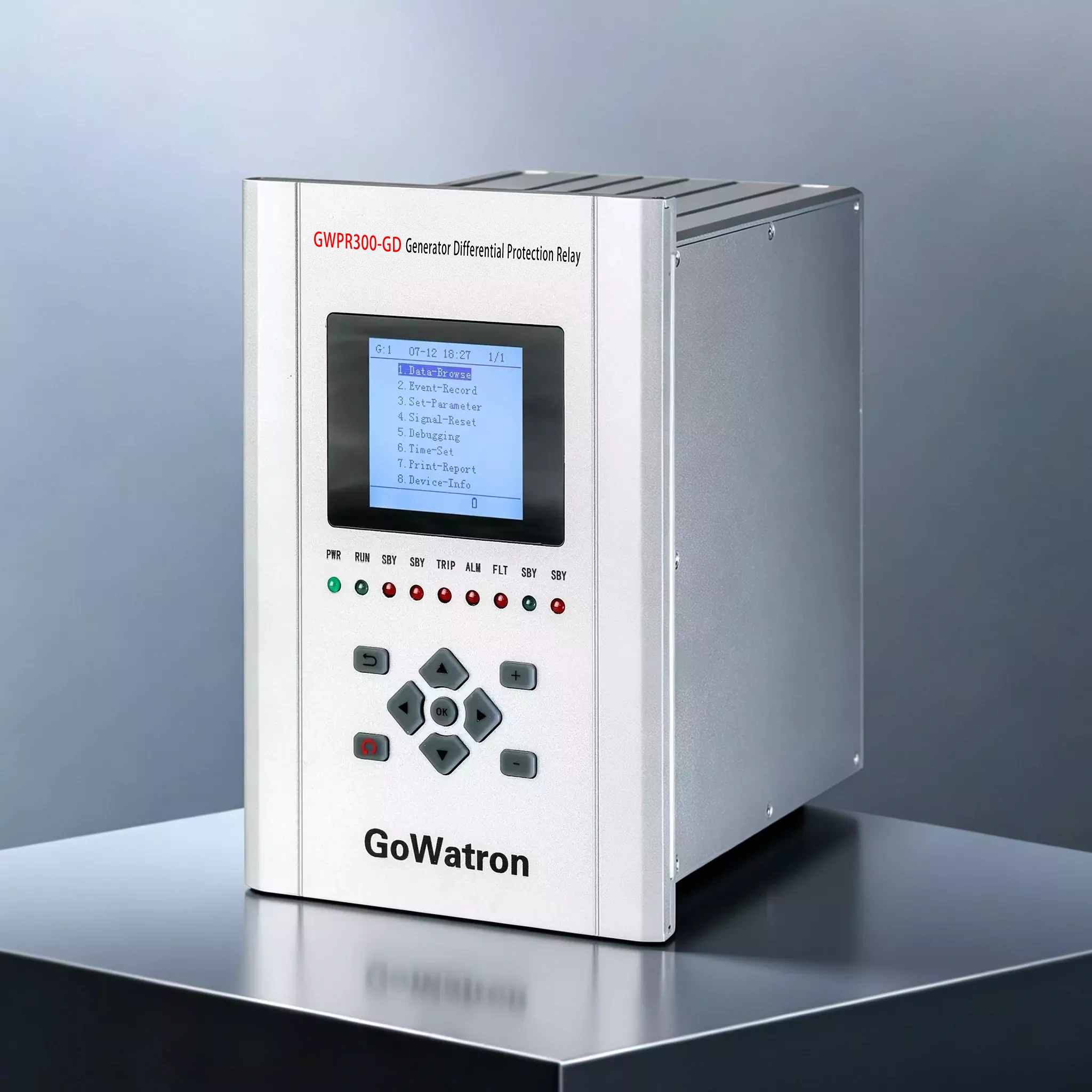
GWPR300-GD
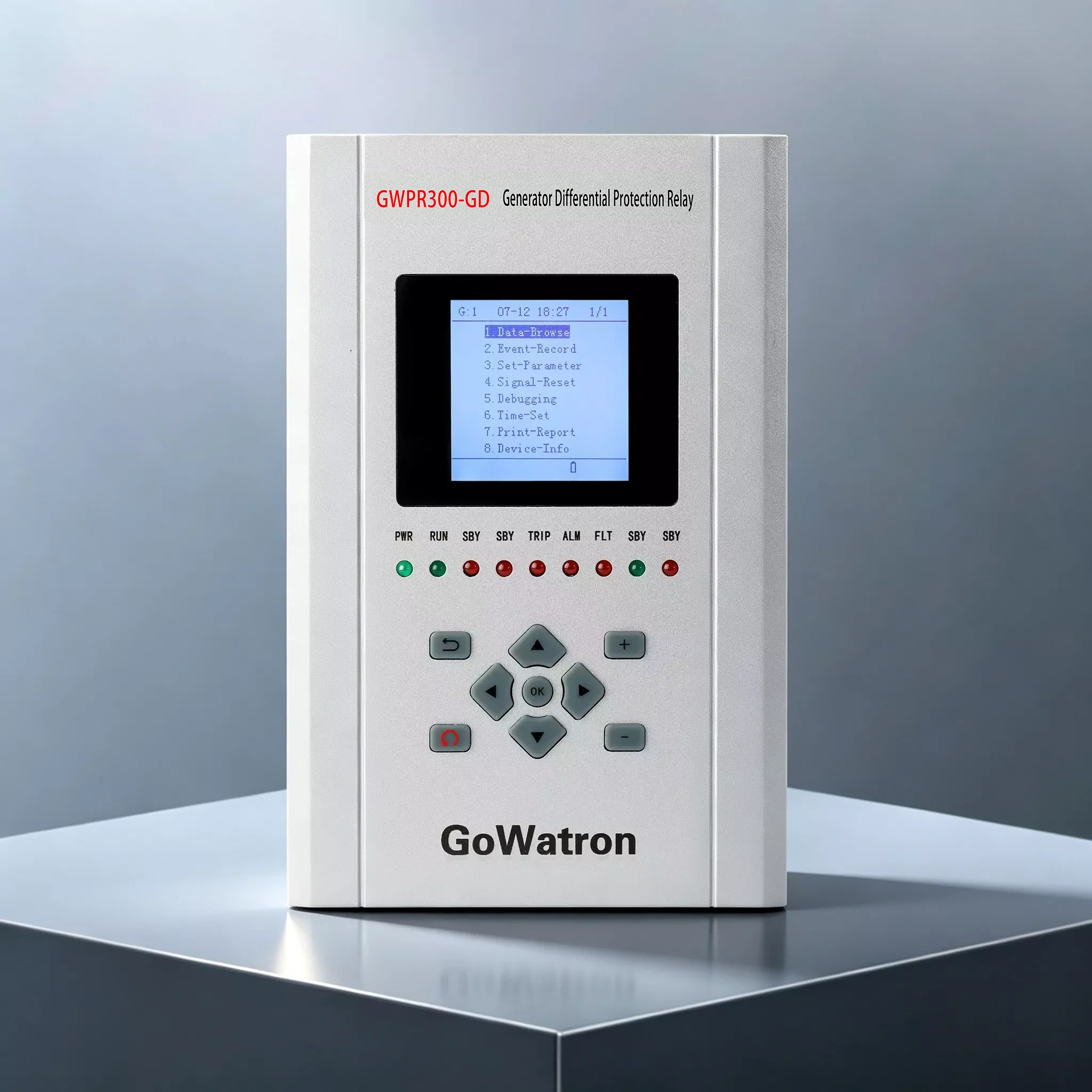
GWPR300-GD
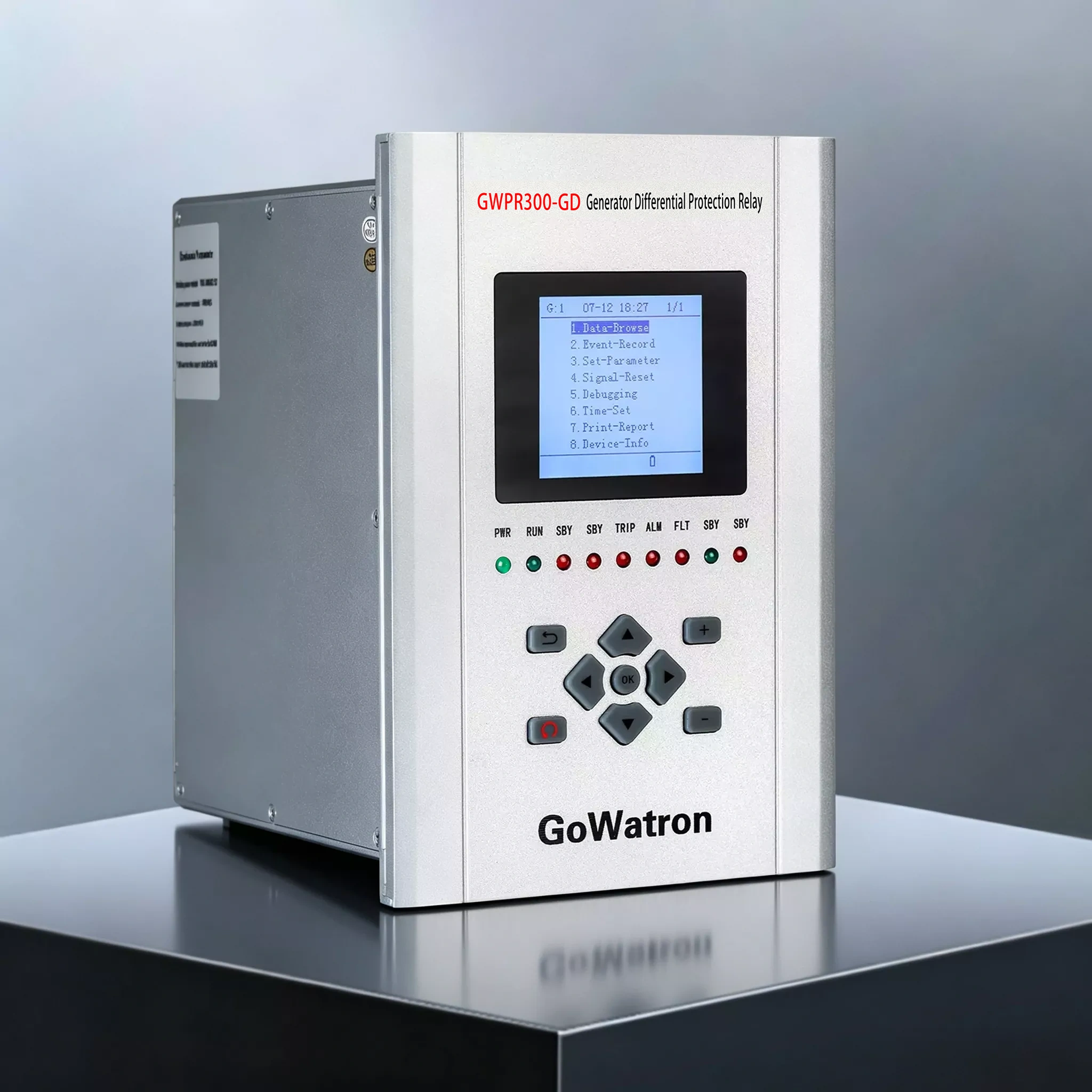
GWPR300-GD
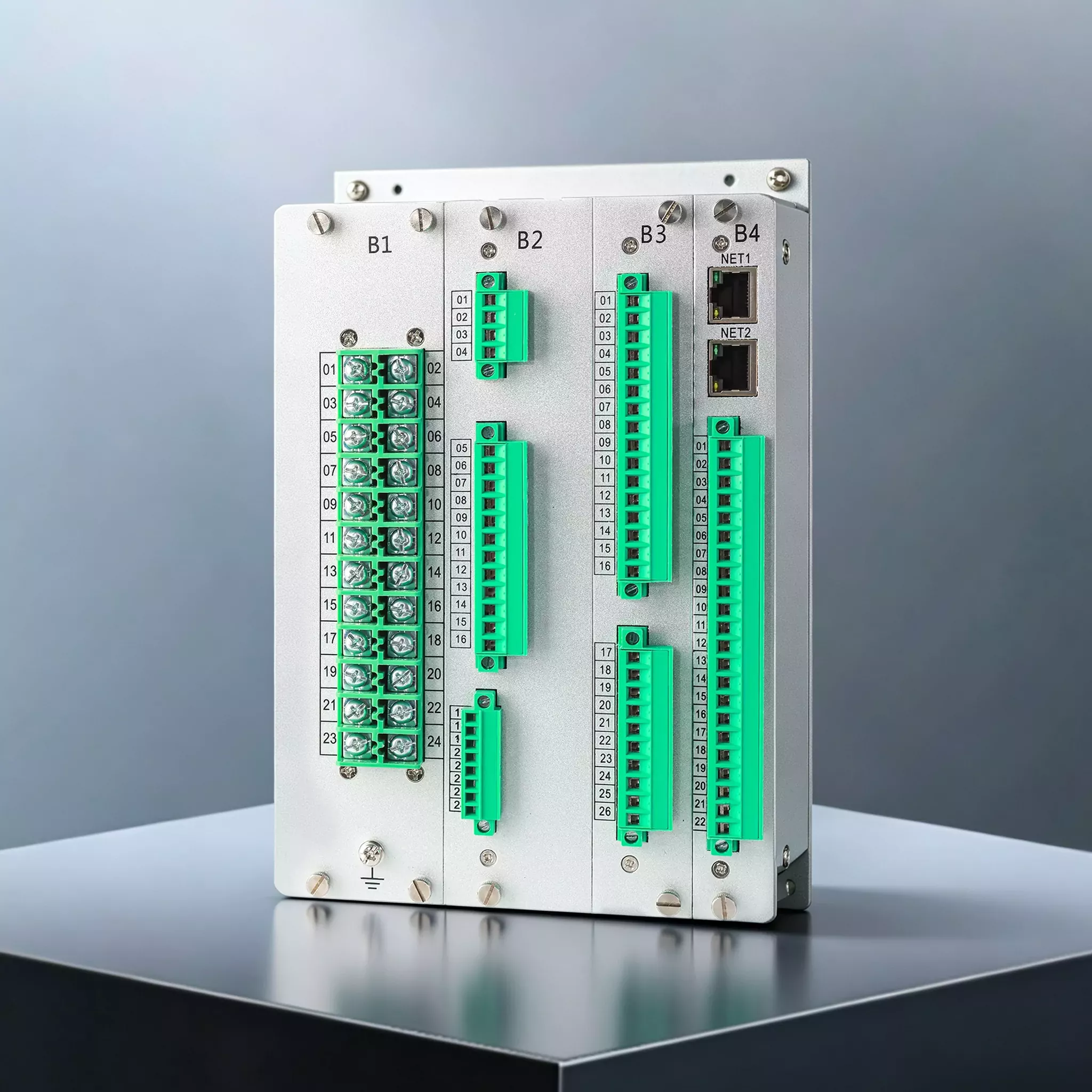
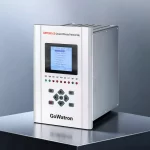
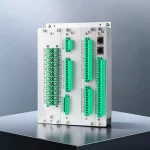
GWPR300-GD Generator Differential Protection Relay
Product Desc
The GWPR300-GD Generator Differential Protection Relay is mainly designed for differential protection of 10 MW hydro generators and steam turbine generators rated up to 100 MW. It is usually mounted on the same panel alongside the GWPR300-GRE Generator Rotor Earth Fault Protection Relay and GWPR300-GB Generator Back-up Protection Relay to form an integrated generator protection system.
- Communication;2× Ethernet (IEC 103/104) + 1× RS485 (Modbus-RTU). Optional: 2 extra Ethernet for IEC 61850.
- Time Sync;IEEE 1588 PTP, SNTP, IRIG-B.
- Fault Recording;128 protection/alarm/remote signals, 128 operation logs, 16 self-test logs, 32 fault waveforms (full timestamps & data).
- Measurement & Control;Monitors 3-phase electrical parameters. 21 DI, 13 relay outputs, 1 power-loss alarm output.




Accuracy
≤ 0.2%

Quick Response
≤ 100ms

Reliable Protection
Comprehensive Protection

Quality Assurance
ISO 9001 Certified

Technical Support
24/7 Expert Support

Fast Delivery
Global Shipping

Warranty
2-Year Warranty
Product Introduction
- GWPR300-GD Generator Longitudinal Differential Protection Relay adopts a high-performance microprocessor-based platform. This fully digital differential protection relay is specially designed for hydro generators with rated capacity ≤ 10 MW, steam turbine generators with rated capacity ≤ 100 MW, and equivalent small and medium gas turbine generators.
- The core protection logic collects currents at the generator terminal and neutral point, and discriminates faults by comparing current magnitudes and phases. During normal operation or external short-circuit faults, the two current vectors remain nearly balanced, and the differential current is close to zero. When an internal short-circuit fault occurs in the generator stator winding, the differential current surges sharply. Once the protection operating criteria are met, the relay instantaneously issues a trip command to achieve rapid fault isolation of the generator.
- Two installation modes are available for this relay: centralized rack mounting on generator protection panels, or decentralized local installation inside generator feeder switchgear. With its flexible structural design, the relay is compatible with diverse main electrical connection configurations adopted by small and medium-sized hydropower and thermal power plants.
Product Functions
Generator Differential Protection
- (ANSI 87G) Instantaneous Differential Protection (Trip)
- (ANSI 87G) Percentage Differential Protection (Trip)
- (ANSI 87GT) Transverse Differential Protection (Trip)
- CT Secondary Open Circuit Alarm (Alarm)
- (ANSI 87G) Differential Current Exceed Limit Alarm (Alarm)
Generator Non-electrical Protection
- Thermal Fault (Alarm / Trip Selectable)
- Hydraulic Fault (Alarm / Trip Selectable)
- Electrical Protection Excitation Fault (Alarm / Trip Selectable)
- Other Electrical Fault (Alarm / Trip Selectable)
Applicable Scenarios
- Turbo-generators (thermal power units, rated capacity: 1 MW – 100 MW)
This device acts as the main protection against stator winding phase-to-phase short circuits. It implements stator longitudinal differential protection by measuring currents from generator terminal CTs and neutral-point CTs. It trips instantaneously for internal faults and ensures no maloperation during external faults. - Hydro generators (grid-connected hydropower units, rated capacity ≤ 10 MW)
It enables fast clearing of internal phase-to-phase short circuits in hydro-generator stators, effectively avoiding severe failures including stator winding burnout and rotor-stator rubbing. - Gas & diesel grid-connected generator sets (distributed energy stations and grid-tied units of captive power plants)
It delivers fast fault tripping for grid-connected gas and diesel generators upon internal short circuits, improving the grid interconnection safety of distributed generation systems. - synchronous condensers
This device serves as the primary protection against stator internal faults for large-capacity rotating synchronous equipment such as synchronous condensers, enabling fast fault isolation for high-reliability operating scenarios.


