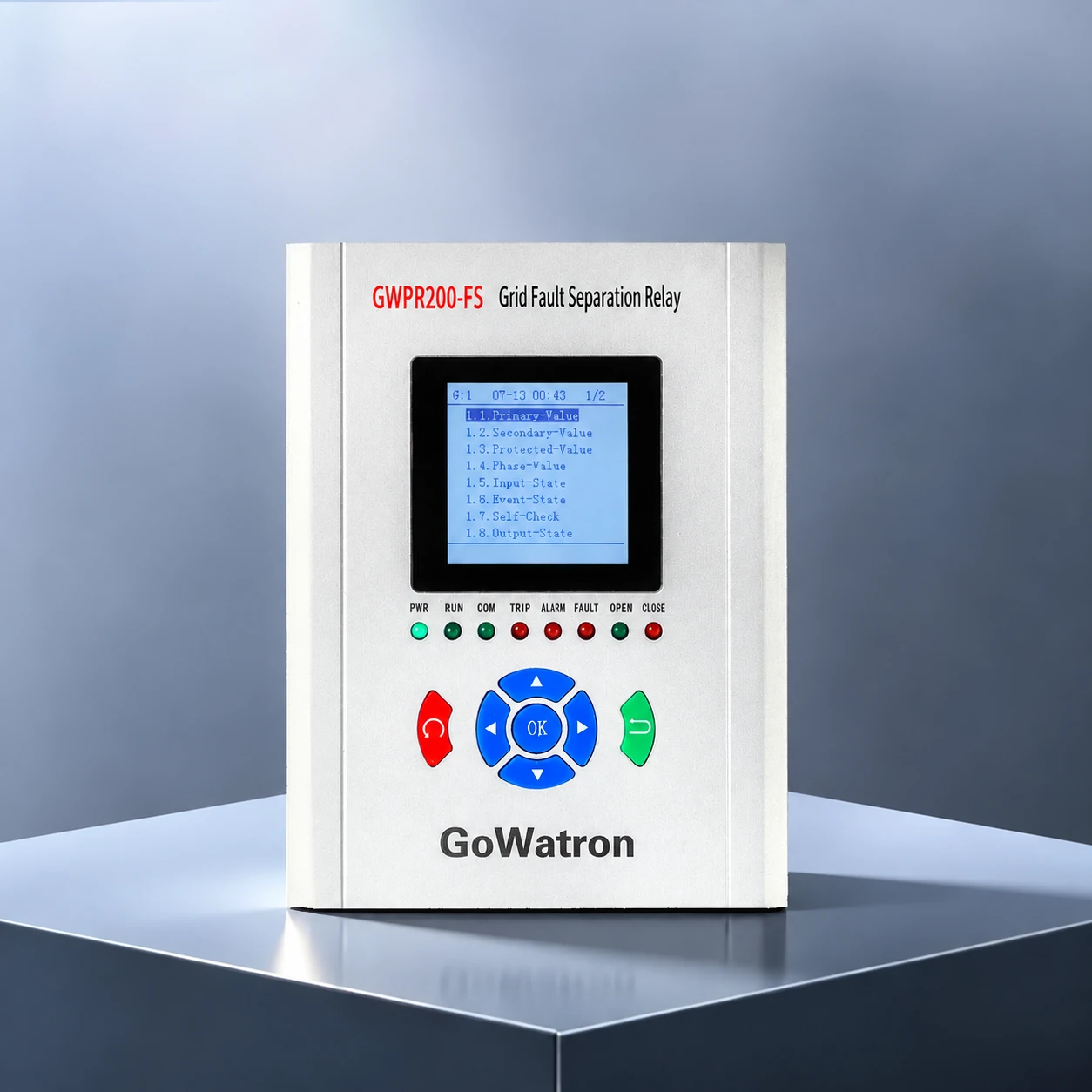
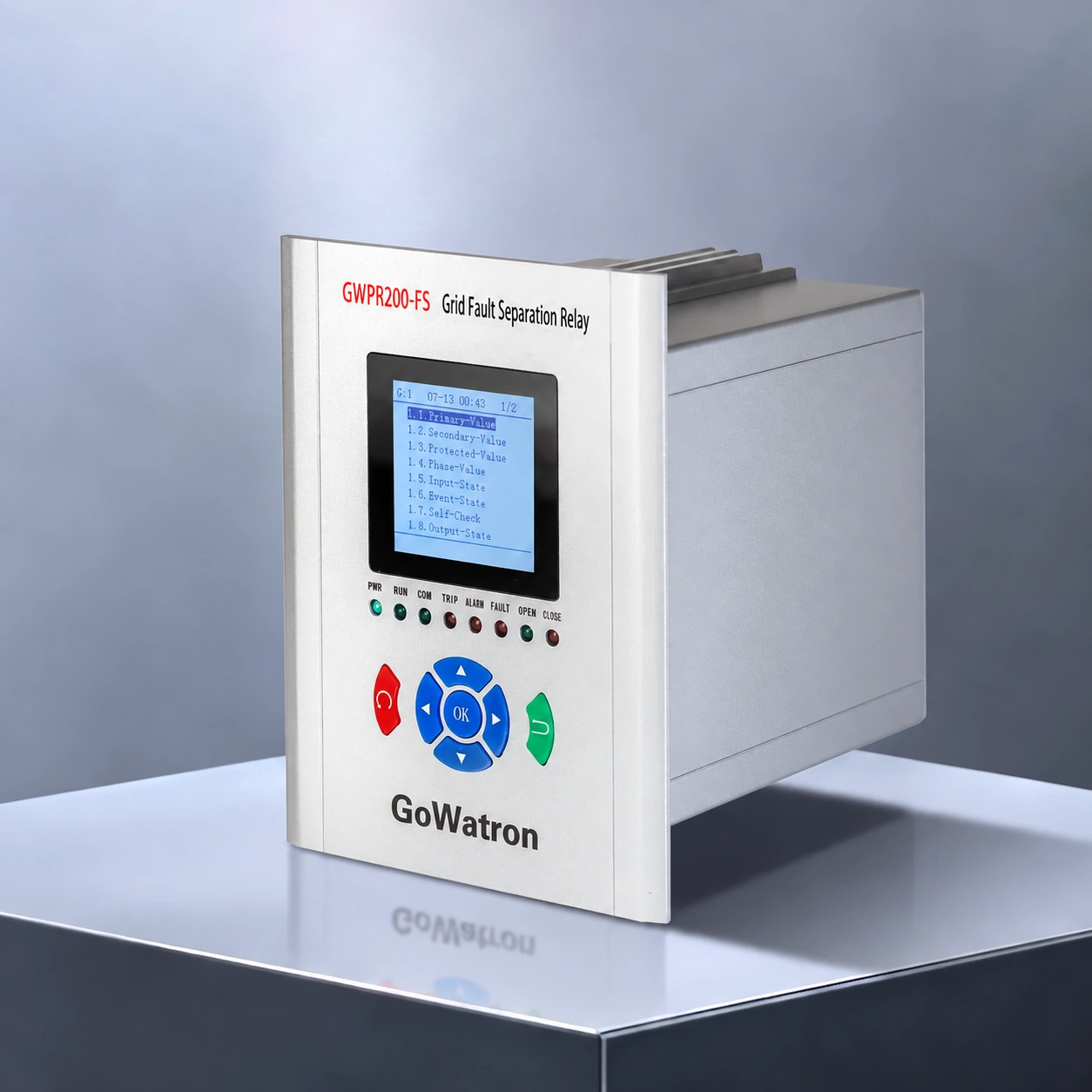
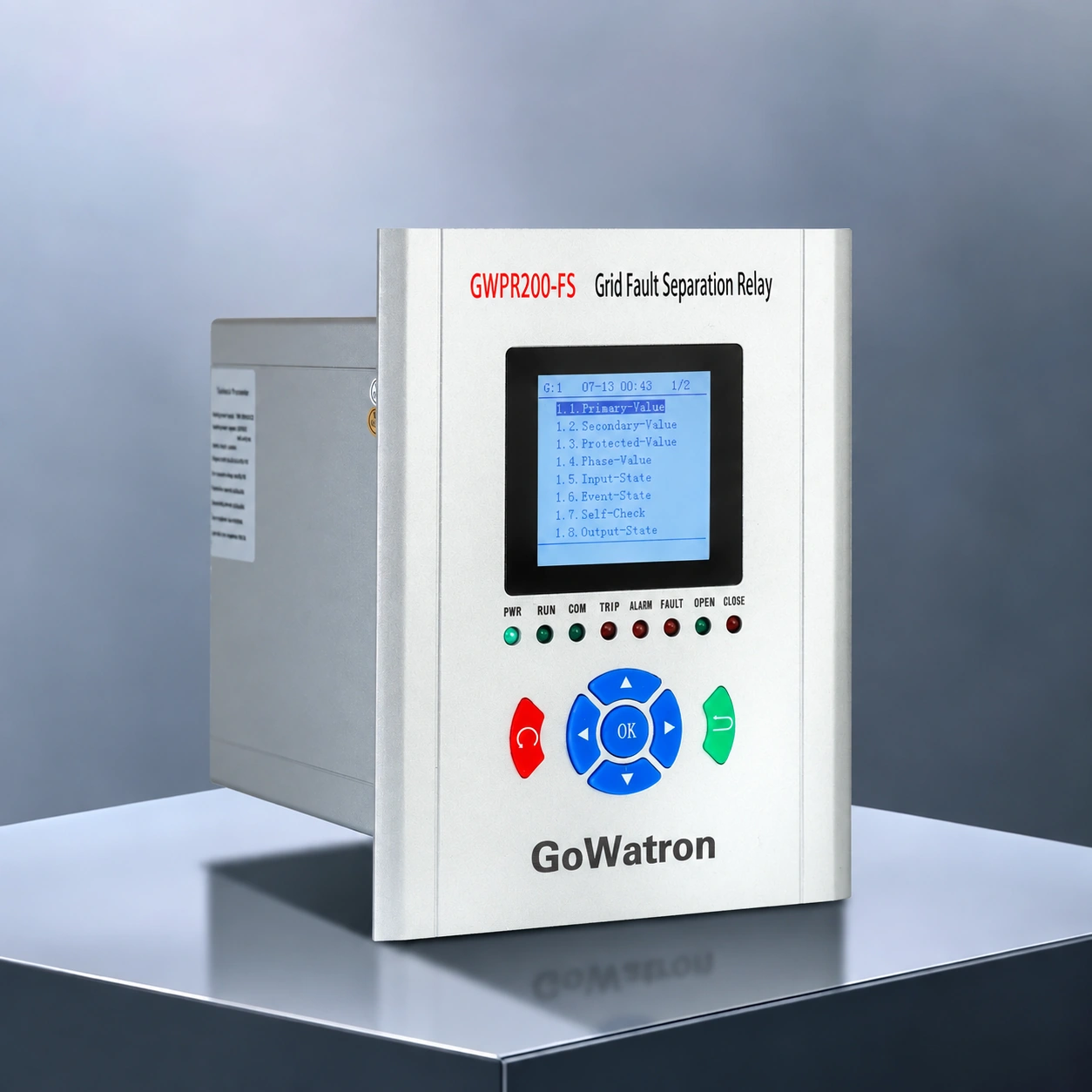
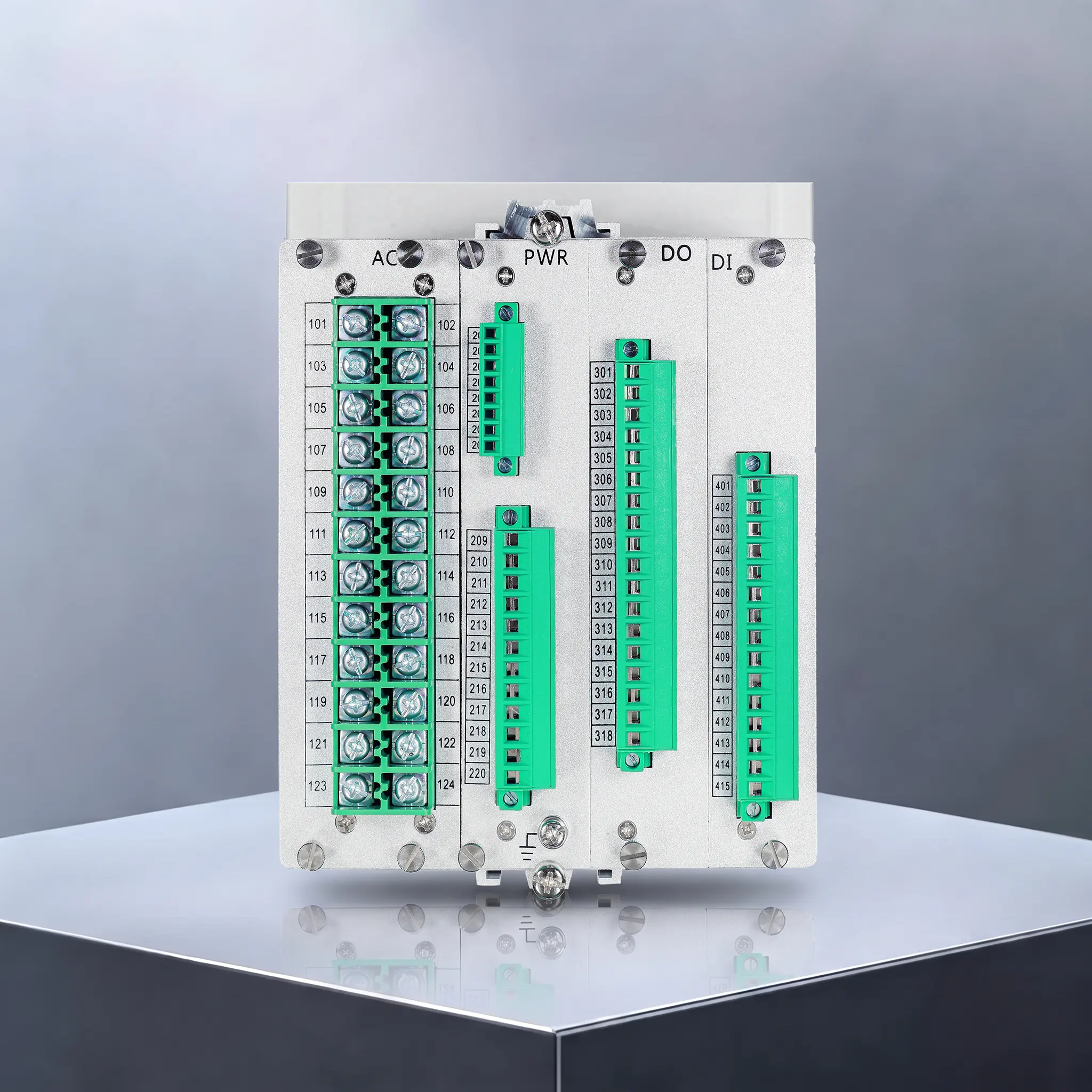

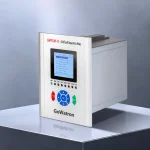
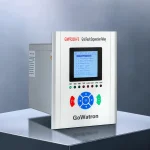
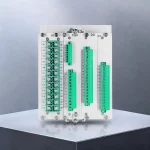
GWPR200-FS Fault Separation Relay
The GWPR200-FS Fault Separation Relay is suitable for the load side or small power source side of 33 kV, 22 kV, 11 kV and lower-voltage power systems. When specified grid fault or abnormal operating conditions are detected, the relay rapidly issues a trip command to separate the local power system or small power source from the utility grid, helping prevent the disturbance from further affecting the local system. It is widely used in hydroelectric, thermal, photovoltaic, gas turbine and captive power plants. It can be installed in a panel or locally in a switchgear cabinet. The device employs a high-speed 32-bit microcontroller with an integrated DSP and floating-point unit (FPU), integrating protection, measurement, energy metering, communication, fault recording and time synchronisation functions. It features a large LCD display and a user-friendly operating menu. Each protection and separation function is modular, functionally independent and flexibly configurable.
Communication Functions (listed by hierarchy):
• 2 Ethernet ports (supporting IEC 60870-5-103, optional)
• 1 RS-485 communication port (supporting Modbus RTU)
Time Synchronisation Interfaces: Supports protocol-based time synchronisation, SNTP time synchronisation and IRIG-B time synchronisation.




1. Product Introduction
- The GWPR200-FS is a fault separation relay primarily used on the load side or small power source side of 33 kV, 22 kV, 11 kV and lower-voltage power systems. When specified grid fault or abnormal operating conditions are detected, the relay can rapidly separate the local power system or small power source from the utility grid. The device integrates protection, measurement, energy metering and communication functions. It employs a high-speed 32-bit microcontroller with an integrated DSP and floating-point unit (FPU) to execute protection logic and calculations. The device offers flexible installation and can be installed centrally in a panel or locally in a switchgear cabinet according to site conditions. All output relays use independent channels, and separation trips, trip signals, alarm signals and other dedicated outputs can be individually configured. It also features comprehensive self-supervision and operation recording functions for reliable operation.
2. Product Functions
- (ANSI 59) Overvoltage Separation Stage I/II/III (Trip)
- (ANSI 27) Undervoltage Separation Stage I/II/III (Trip)
- (ANSI 59N) Zero-Sequence Overvoltage Separation Stage I/II (Trip)
- (ANSI 81O) Overfrequency Separation Stage I/II/III (Trip)
- (ANSI 81U) Underfrequency Separation Stage I/II/III/IV/V (Trip)
- (ANSI 60) VT Circuit Failure Alarm
- External Intertrip 1/2 (Trip)
Measurement & Control Functions:
- Voltage: Ua, Ub, Uc, Uab, Ubc, Uca, 3U0, U0z, Ux
- Current: Ia, Ib, Ic
- Power: P, Q, cos φ
- Frequency: f
- Energy: EP+, EP−, EQ+, EQ−
- 14 binary inputs
- 8 relay outputs
- Sequence of Events (SOE) records
Recording Functions:
- Protection events: Records the event time, operating value and operated function; up to 128 records
- Alarm events: Records the event time, operating value and alarm function; up to 128 records
- Binary input events: Records status changes; up to 128 records
- Operation records: Records relay operations, including setting modifications and protection function enable/disable operations; up to 128 records
- Self-supervision events: Records events generated by device self-supervision; up to 16 records
- Fault recording events: Records waveforms associated with protection/separation operations; up to 32 records
3. Application Scenarios
- Voltage Levels: Suitable for fault separation on the load side or small power source side of 33 kV, 22 kV, 11 kV and lower-voltage power systems.
- Applications: Widely used in hydroelectric, thermal, photovoltaic, gas turbine and captive power plants.
- Installation Methods: Can be installed in a panel or locally in a switchgear cabinet.
- Applicable Systems: Suitable for both unearthed neutral systems and earthed neutral systems (configurable through the corresponding protection settings/control words).
Typical Operating Conditions:
- Separation of a local power system or small power source from the utility grid when specified grid fault or abnormal operating conditions are detected
- Separation during frequency abnormalities (underfrequency/overfrequency)
- Separation during voltage abnormalities (undervoltage/overvoltage/zero-sequence overvoltage)
- VT circuit failure alarm and blocking of undervoltage separation
- External intertrip (trip)


